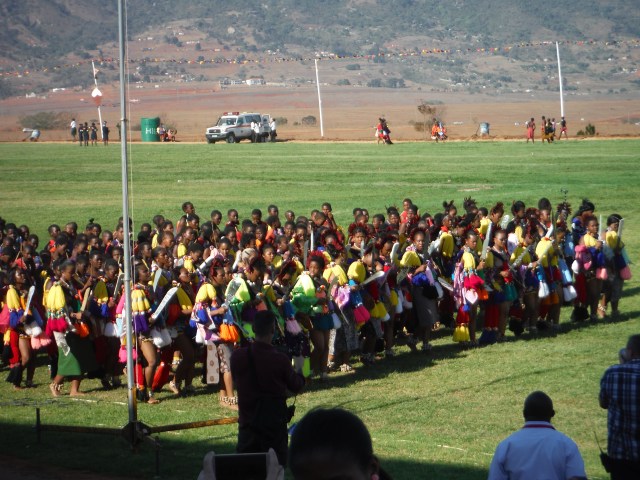
Day one: Registration at Umhlanga

Today started early at 4:45 a.m. because we were told to meet the bus taking us to Ludzidzini at 6 a.m.

I asked my sisi for us to leave at 5:50 a.m. to walk to school so that we could be on time. When transportation is involved, I really like to be early.

We finally left the house at 6:20 a.m. (sisi lost her phone) and arrived at school to only a couple other girls.

We heard rumors of the actual pick-up time being 8 a.m. I read until I went to the bathroom and repacked my bag just before the top of the hour.

By the time 9:45 a.m. rolled around, I had drunk half my water and eaten my snacks. I thought I would be on my way home by this time and we still had not left.

I walked home for more food and water and to leave a few of my layers behind. By the time I got back to the school everyone was loaded in flat bed trucks and I panicked. Riding in the back of a truck is a sure-fire way to get fired from the Peace Corps in Swaziland. Fortunately, I was allowed into the cab.

We headed away from town, eventually stopping at the inkhundla building in the next community. I can’t figure out the purpose of that stop. We dropped no one off and picked no one up.

Finally, we went up to our umphakatsi where we moved to a bus with the rest of the girls from my chiefdom who are not from my community. After a quick ride to Ludzidzini, we sang and marched before waiting for our turn to register.

One of the guards sang a wedding song about being white (meaning pure, in this song, rather than skin color) when she saw me. After registering, another elder asked for my name and apparently made a profession of love that I missed (I told my group about my game where I guess how many marriage proposals and professions of love I will receive on a given day, which they think is hysterical. They are counting for me, because like this one, I do not always understand the ones in siSwati).

We had to pass a singing and dancing test to register. We passed those parts but the testers were disappointed that not everyone was in a traditional outfit.

After being dismissed, we walked to the tents set up for sleeping. They picked out a location and we sat around for a time. Eventually we decided to check out the shops coming to life in Lobamba selling everything an imbali may have forgotten to bring to Umhlanga and lots of things she doesn’t need. Like short shorts and swimsuits. Neither are cultural-event appropriate. We also posed for a photo for some tourists and declined all the other requests.

Finally I headed home with five proposals, which was my guess. I am anticipating more tomorrow.
Posted in Africa, Peace Corps, Swaziland | Tagged , , , , , , , | 1 Comment

Let the dancing begin! It is time for Umhlanga

The integration activity of the year for young females is here. One year ago my babe said I should dance at Umhlanga with my sisi this year.

wp-umhlanga

One of the best coordinated groups of girls in 2016. They are bowing to the king.

Today it officially starts.

There was a community meeting with the caregivers of the participants that centered mostly around me, and how I would be participating. There are a few things that could get me fired, and I am not interested in having my act of ultimate integration force me to lose my job. Babe did his best to explain the rules and how I would participate. I was aiming for maybe a 75 percent level of participation, by not camping out every night and by not going to three of the eight days.

DSCF3365

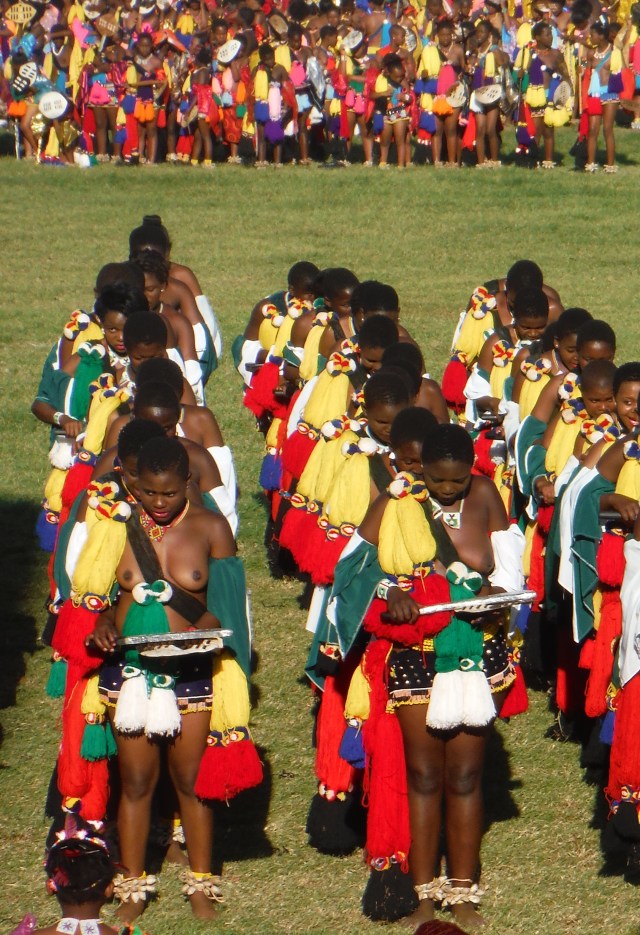
The princesses wear the red feathers. They are the first group to perform.

I will be attending the first two days, which I had not planned on, because I am their sister and they want me to be there. I think I can check off integrated now after two practices.

Let’s just say that those 15 hours of practice with my siSwati tutor paid off. I think I am singing lead on a few songs and dancing in the front row of my group, when I thought I would be hiding in the back, barely hanging on.

I think, though, that the group has realized that everyone, and I mean everyone, will be watching us because of me, and we might as well play it up and put on a good show.

But let’s backtrack a bit about Umhlanga. The word umhlanga means reed(s). In reference to the traditional event, it means the Reed Dance.

Umhlanga.jpg

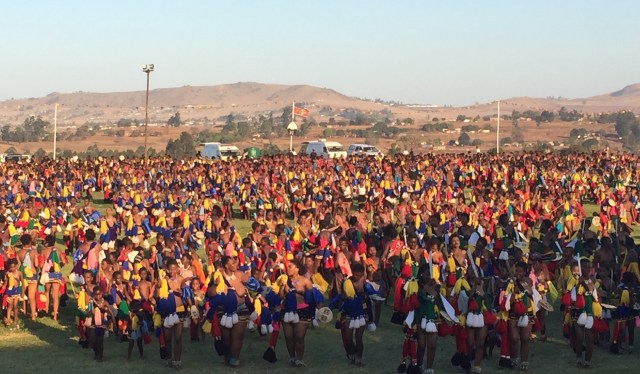
All the chiefdoms dance together after the procession is complete.

This event is for the timbali (flowers, specifically roses, but in this instance, maidens) of Swaziland. Only childless, unmarried females are allowed to participate. Each chiefdom sends a group of girls, sometimes split into two age groups, where the older girls march farther than the younger girls.

My chiefdom’s experience is a little bit different because we host the group of younger girls. Preparations are in full swing, with new latrines built, dozens of portable toilets set up, extra jojo tanks of water delivered, and tents erected for the girls to sleep under. So rather than go to the older girls location, we sleep in our chiefdom, but still “camping” rather than at home.

On day one, which is always a Tuesday, participants get bussed to the royal village of the Indlovukazi (big elephant, or queen mother). This is in Ludzidzini. Participants will be officially registered so that they can be kept track of. Elders from the chiefdom will supervise each group.

On day two, the older group marches to eNkabezweni, near Lozitha, which I will be doing. The younger girls will be going to Luyengo. My group will then be bussed to Luyengo. This should be a two-hour march, and we will be in marching outfits from this point on.

On day three, both groups cut reeds. We will be cutting reeds at UNISWA Luyengo. This year, all participants have been requested to cut at least 15 reeds (up from seven). The number cut must always be odd.

On day four, participants return to Ludzidzini carrying their bundles of reeds, supposedly arriving at night. This will be a 30 km march.

On day five, participants rest.

On day six, participants deliver their reeds to the queen mother’s boma. There is a special song sung when delivering the reeds. Then there is dancing at the arena.

On day seven, a procession of the chiefdoms begins once the king has arrived. All of the timbali will dance in front of the king, and then he will come into the audience to greet a number of participants. He will be followed by his retinue and hordes of cameras. The whole time the girls will be singing and dancing. After each group passes in front of the king, they will form an arch across the field to continue their songs and dance. The princesses will be in the center and sing songs via microphone for the whole group to dance in unison.

On day eight, the king will command that a number of cattle are slaughtered and each participant will take a piece of meat home.

One of my friends here will be documenting three of the days for me. Swazi TV and the Swazi Times, I am quite sure, will be documenting all of my activities. I thought I might be able to stay a secret by not going to the group registration, but that is not the case.

I cannot tell you much else about the upcoming week, other than that I am incredibly excited. I just hope that I can sing and dance well when I am the subject of much attention.

Posted in Africa, Life, Peace Corps, Swaziland | Tagged , , , , , , , , | 4 Comments

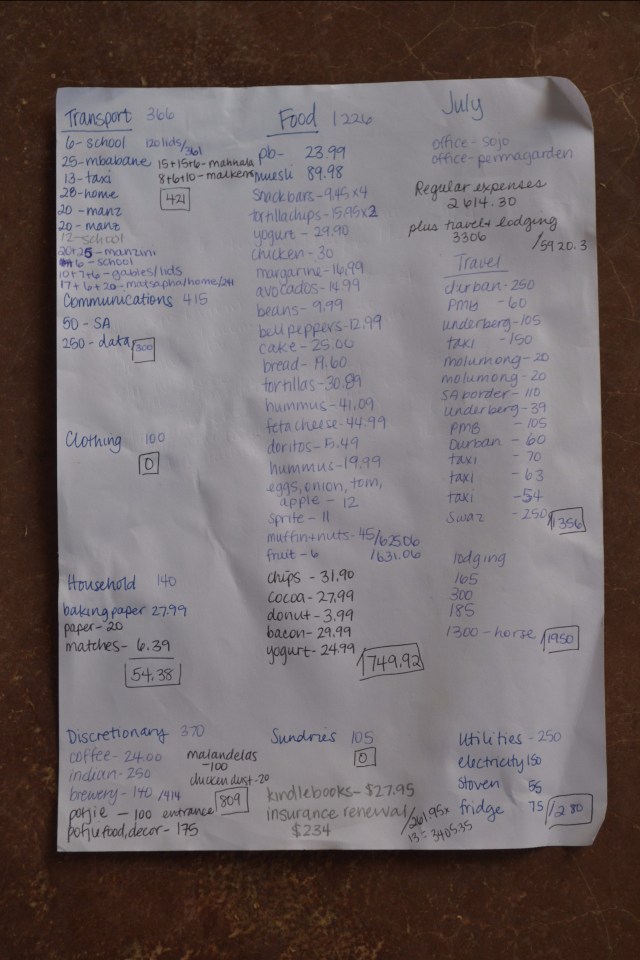
How I spent July’s PCV stipend

July was a much more expensive month. I took a vacation to Lesotho and Durban, and I had saved enough money that I was able to spend only $50 from my American account. Yay me!

There was lots of good food and good adventures. Go to Lesotho. It’s an amazing enough place that I will likely plan another trip in warmer weather.

As for spending my stipend, I made two trips to the office that were reimbursable, but I did have to pay for a night out later in the month for the cooking contest I participated in. I was able to reign-in my grocery shopping, as well, to offset eating out in Durban.

dsc_0860.jpg

Posted in Africa, Peace Corps, Swaziland | Tagged , , , , , , , | Leave a comment

A moment in my life: Running from mama cow

So many entertaining things happen in my life in Swaziland. These are the moments I will want to remember because they make me laugh, and they show insight into my daily routine. These moments are often hard to photograph and usually last only a minute or two. I will start sharing them with you in this occasional series. 
Mama cow Madiba (yes, she is named after Nelson Mandela) and I have a mostly hate relationship. I give her a wide berth whenever I can because she has charged me. 

Yesterday when I went grocery shopping I bought make some vegetables because I came home really late the night before and she told me I was naughty. 

I rounded the corner from my house to the back door of the main house and came face to face with Madiba, who lunged for the chard in my hand. 

Phetsile shouted, “Run, Hloniphile!”

I ran back to my house, chased by Madiba, and narrowly got inside with the door shut before Madiba could come crashing after me. 

I was able to give make the veggies a few minutes later after the cows had been retained, which she was quite excited about. She heartily laughed after hearing about Madiba’s attempted thievery, too. 

Posted in A moment in my life, Africa, Peace Corps, Swaziland | Tagged , , , , , | Leave a comment

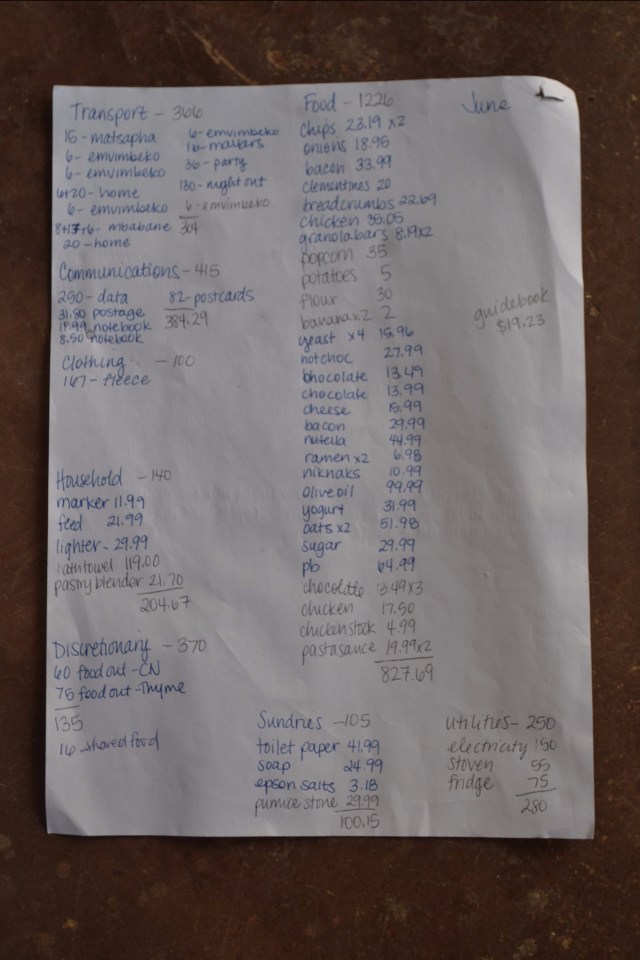
How I spent June’s PCV stipend

June ended with two busy weekends of food preparation. I came in under budget in every category, which was great because I was going on a vacation the next month.

dsc_0859.jpg

Posted in Africa, Peace Corps, Swaziland | Tagged , , , , , , | Leave a comment

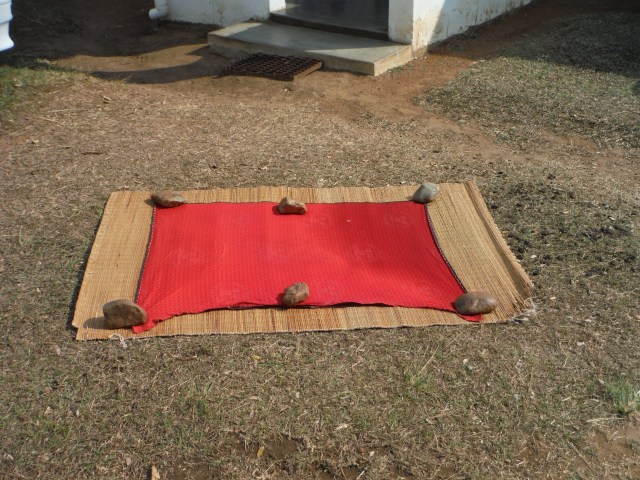
Wednesday photo: How to iron a lihiya

As my family was preparing for a wedding of a relative, my eldest bhuti showed me the traditional way to “iron” a lihiya.

A lihiya is a piece of fabric worn like a wrap-around skirt in traditional dress. 

It turns out that there is no iron involved. 


DSCF3977.JPG

Rather, the layer or layers of fabric are spread out on a grass mat and held down by rocks to dry in the sun. 

One of the questions that I have had for a year was finally answered, as well. I asked make if I should hem the two cut edges of the fabric, and she said no. Since then, I have just trimmed the dangling strings. 

My bhuti explained that the edges should be rolled as tightly as possible, and that the drying process will keep the edge rolled and the frayed edges out of sight. 

Posted in Africa, Peace Corps, Swaziland, Wednesday photo | Tagged , , , , | Leave a comment

What’s cooking: Snacks

As a Peace Corps Volunteer in Swaziland, I have a limited food budget. But I also love food–both eating and making it. During PST, I cooked without an oven, refrigeration, and a non-stick skillet. Now at my permanent site, I have all three, though at a cost. This occasional series will highlight my cooking and baking and the recipes I use.

I like my snacks to be portable, and during PST, I had a hard time creating portable snacks other than popcorn, hard boiled eggs, and fruit. Since then, I have expanded my snacks to include a combination of packaged and homemade items.

Packaged items

  • Clicks has a big range of packaged snacks including crackers, pretzels, and granola bars.
  • Shoprite and Pick’n’Pay both have a selection of nuts. The almonds are usually the most affordable.
  • Spar sells fruit rollups in mango, peach, apricot, and guava flavors.
  • I also really enjoy feta with the Clicks tortilla chips.

Homemade items

  • Cauliflower buffalo wings
  • Sweet potato chips
  • Banana bread


Cauliflower buffalo wings

Time: 45 minutes
Cost: E30
Servings: 4-6 

Ingredients:
1 cup floor
2 teaspoon garlic
1 cup of water
1 head of cauliflower, chopped
3/4 cup buffalo or other hot sauce
1 teaspoon butter

Recipe:

  1. Preheat stoven to 230*C. Line the rack with foil and spray.
  2. Mix flour and garlic. Pour in water and stir. Add cauliflower and toss to coat.
  3. Spread cauliflower on foil and bake 18 to 20 minutes.
  4. While baking, melt butter and combine with buffalo sauce. Pour sauce over cauliflower after the 20 minutes are up and return to the stoven to bake for 5 more minutes.

*To make this in a skillet, sauté the cauliflower in a well-greased skillet until almost tender for about 10 minutes. Melt the butter with the buffalo sauce and then pour over the cauliflower and cook for 5 more minutes.

Sweet potato chips

Time: 45 minutes
Cost: E30 for a bag of four orange sweet potatos at Pick N’ Pay
Servings: 2

Ingredients:
1 sweet potato, scrubbed and sliced 1/8th inch thick
1 tablespoon oil
½ teaspoon coarse salt

Recipe:

  1. Preheat stoven to 200*C.
  2. Lay sliced sweet potatoes on rack covered with foil. Drizzle with oil, toss, and spread in a single layer on the sheets.
  3. Bake, flipping and rotating once, for about 25 minutes or until desired crispness.

Banana Bread

Time: 75 minutes
Cost: E15
Servings: 10 

Ingredients:
3 very ripe bananas
1/3 cup melted butter
1 teaspoon baking soda
Pinch of salt
½ cup sugar
1 egg, beaten
1 teaspoon vanilla
1 1/2 cup flour

Recipe:

  1. Preheat stoven to 175*C.
  2. Mash bananas until smooth. Stir in butter.
  3. Mix in baking soda and salt. Mix in sugar, egg, and vanilla. Mix in flour.
  4. Pour batter into a greased loaf pan or muffin cups. Bake 50 to 60 minutes, rotating every 15 minutes, in a loaf pan, or bake about 15 minutes, rotating half way through, for muffins.
  5. Cool completely on wire rack or on top of the gas burner in the pan before removing.


Posted in Peace Corps | Leave a comment

A moral dilemma about aid: Thulane’s story

I see needs everywhere I look in Swaziland.

I see undernourished children. I see 18-year-olds in grade seven. I see gogo caring for seven children because their parents died. I see teenaged mothers. I see a room full of high school girls ecstatic to receive the health classes they never had. I see more scars and tumors than I can count.

I see hard work. I see proud people. I see traditions followed. I see everyone doing the best they can with what they have.

My community infrequently asks me for money, and when people do, I am usually able to talk to them about saving their own money or creating a way to earn money.

While it is hard to see hungry children (and all of the other needs I mentioned), I know that me feeding them will not solve any problems.

I can keep a clean conscience about this, and I am able to sleep at night.

Peace Corps does not support PCVs giving away anything for free other than knowledge, and I wanted to work for this organization for this reason. This post is not about the merits or disservices of traditional aid, though.

Instead, this post is about the first person who has challenged my view.

In general, I do not know much about anyone other than the children in my family. I would love to ask many people hundreds of questions about their lives, but I do not want to be too nosy.

When I asked my English club students to write letters to students at my high school, no one wrote about anything too personal. They shared their favorite sports and subjects, how many siblings they have, and where they live.

My club meetings were canceled at the end of the last term because of exams, so I was asked to come to a different club’s meetings. This other club helps students with a handful of subjects. They meet at the same time on Tuesdays as my club, and most of them do not come to my Friday sessions.

At one of my sessions with this other group, I asked them to also write letters, and most of them did. But this group was much more personal.

They shared about being bullied, dead parents, and unmarried parents.

And then there’s Thulane’s* letter.

He is one of the students who occasionally comes to English club and always greets me when he sees me. He speaks great English and is very polite. I was sure he was older than an eleventh-grader in the U.S., but that is relatively normal here.

His letter took me by surprise, and I have not stopped thinking about it because he explains why he is 30 years old and still in high school.

He grew up with his father, and his grandmother was paying his school fees (only recently were grades 1-7 made free). His grandmother died, and the money stopped, too. Then his father died. He went to look for his mother, whom he found, and they lived with a relative who started paying for his school. His mother moved out because the relative was abusive. Thulane stayed to continue school.

Eventually, the abuse was too much, so he moved out in 2006 after finishing Form 1, looking for work to support himself. He went back to school in 2015, paying for Form 2 himself. Friends and teachers paid the last two years. He has one year of high school left.

What do I do with this information?

I am not allowed to report abuse, even if it was current.

If I offer to help or ask you to help pay his school fees, what message does that send? What about all the other students at his school and across Swaziland who cannot afford school fees? Would I feel differently if he hadn’t been abused? If his loving family members hadn’t died or abandoned him? If next year wasn’t his final year of high school? And what about after high school? He still will not be able to afford university, and there is no FAFSA form to fill out here in Swaziland to show that you have no money in order to receive a grant from the federal government to fund your education.

I could stop buying cheese and yogurt and stop making cookies and cake to share with my family and friends. I could stop eating out. I could save that money for Thulane’s school fees instead.

I cannot help everyone, but I–or we–could help this one person finish high school. Is it worth it?

*Name changed for privacy.

Posted in Africa, Peace Corps, Swaziland | Tagged , , , , , , | 2 Comments

Learning siSwati is hard

Yesterday, G15 took their language examination, and their stress surrounding the test has made me think quite a bit about my own struggle with learning siSwati.

I have many complaints about the language-learning process and materials here, and even with a relatively substantial effort to learn siSwati through tutoring, I will most likely leave Swaziland unable to have a substantial conversation with anyone in siSwati.

Changes were made this year to the language program, and I hope that G15’s scores are better than my group’s scores. This year’s group was threatened with being sent back to the U.S. if they do not pass the test, and perhaps that was said in hopes of them putting in more effort, but instead it has created a culture of fear, which is not helpful. We should find out on Monday if anyone will be sent home.

I did not pass the language test at the end of PST, although I did pass when I was retested at the end of Integration. I remain confident that singing the Swazi national anthem is the way to pass. We had a practice test during week four and my tester said I did horribly (I did not think it was that bad). One of my biggest complaints is that no one offered me additional help or resources or asked me how I thought I was doing in order to help me catch up.

I know now that there are no additional resources or help for anyone falling behind in siSwati class. SiSwati is an oral language rather than a written one, so there are extremely limited language-learning materials available to Swazis let alone Peace Corps Volunteers.

I really want to know how other Peace Corps posts that teach Bantu languages teach them. For as much as I want to make comparisons, especially to a country like Mozambique that is two hours away and the PCVs finish PST fluent in Portuguese, Portuguese is a language that has teaching resources available.

But that’s enough of comparisons. Comparisons can be the bane of any Peace Corps Volunteer’s experience. So to end a good note, I have spent August’s tutoring lessons learning songs and dances for Umhlanga, the reed dance, which is Swaziland’s next holiday. It has been a lot of fun and a much more interesting way to practice siSwati.

Posted in Africa, Peace Corps, Swaziland | Tagged , , , , , , , , | 2 Comments

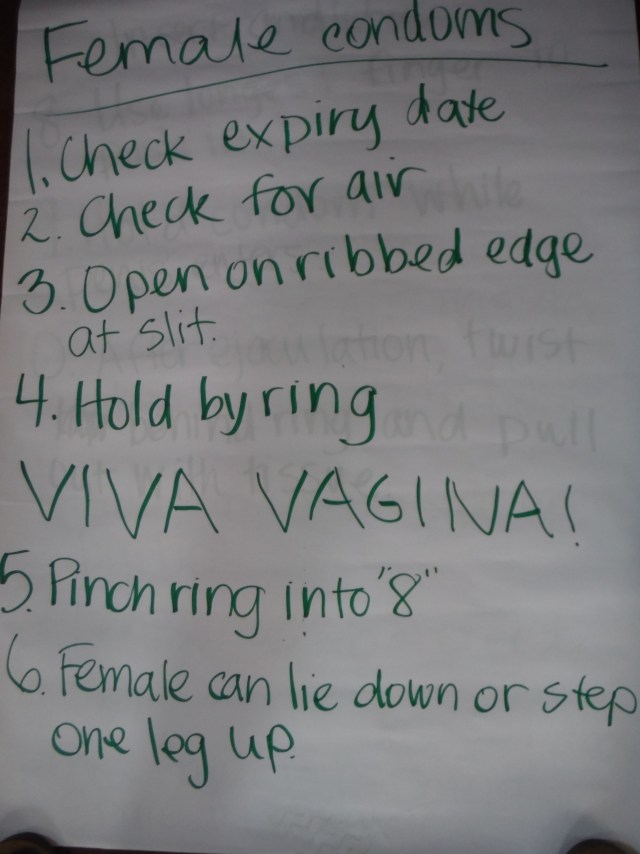
Wednesday photo: Viva vagina

“Viva vagina” was the pumped-up cheer our condom demonstrator gave in the middle of a female condom demonstration.

dscf3976.jpg

The session was part of a day-long training about HIV and activities that can be used in our communities for G15 during their Pre-Service Training.

I am so proud of this day and so happy that after asking for a condom demonstration training for at least nine months, I was able to plan the activity myself with Condomize Swaziland, a group that is working to increase the use of condoms in Swaziland.

Condoms are an excellent way to reduce the spread of HIV and pregnancy and are given away for free across the country. In a country where 28 percent of the population is HIV positive and an abstinence-only message is not working (easily proven by regular pregnancies at high schools), condoms are a necessary part of life here, especially for Peace Corps Volunteers working with young adults


Posted in Africa, Peace Corps, Swaziland, Wednesday photo | Tagged , , , , , | Leave a comment