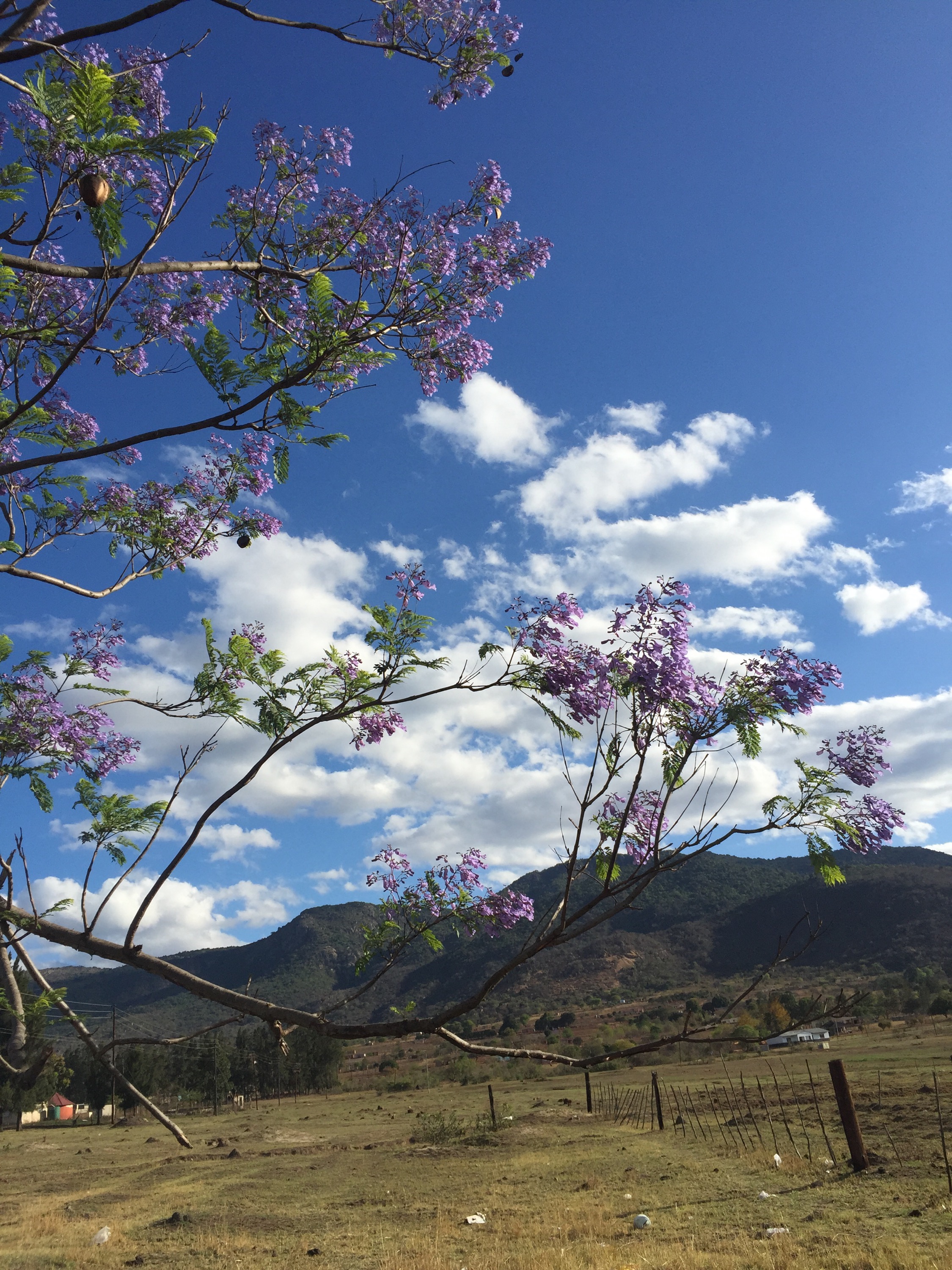
Wednesday photo: Jacaranda flowers

The jacaranda tree is one I had seen photos of before moving to Swaziland because of its beautiful flowers. I hoped that I would be lucky enough to see some in my community. Now that they have bloomed I can see so many of the trees! 

  
I did not know the tree was Brazilian, though. My family has a wonderful Southern Africa garden book that I have been able to consult along with my own plant and animal guide to learn about many of the plants I see regularly. 

  
The books say the jacaranda blooms in summer, so it must be that time of year. 

The trees are so lovely from afar and up close. My other new favorite tree is the coral tree. It was a spring-blooming tree, so I missed taking photos of its coral flowers. You will just have to wait until next year. 

Posted in Africa, Peace Corps, Photos, Swaziland, Wednesday photo | Tagged , , , , , , , , | 2 Comments

Packing for Peace Corps Swaziland: What Peace Corps gives us

It is hard knowing exactly what you will receive from Peace Corps Swaziland upon arrival and after swearing in. This list changes every year, but it also seems to stay relatively similar. I wanted to share what I received, so that it can better guide what you pack. Most of these items were in our possession beginning the day we move in with our training family. Most were at our hut waiting for us. 

Housewares

  • 2 big pots
  • Skillet (this may be the worst skillet known to man, but I’m trying to get a better one for G15)
  • Two-burner gas stove and your first propane tank
  • Metal spatula/turner
  • Big metal spoon
  • Can opener
  • Small and large tea kettles
  • Mixing/salad bowl (I used this for my hand washing station.)
  • 2 plates
  • 2 bowls
  • 2 mugs
  • 2 knifes
  • 2 forks
  • 2 spoons
  • 2 tea spoons
  • 1 steak knife
  • Bleach
  • Dropper
  • Water filter
  • Toilet paper
  • Candles
  • 20 L bucket
  • 10 L bucket
  • Bath tub
  • Rinse basin
  • Sheets and pillows for a double sized bed
  • Pillow
  • 2 blankets
  • Bug net
    *Either your family or the Peace Corps will provide a bed, chair, and table for your room during PST. You have to get your own for permanent site. 

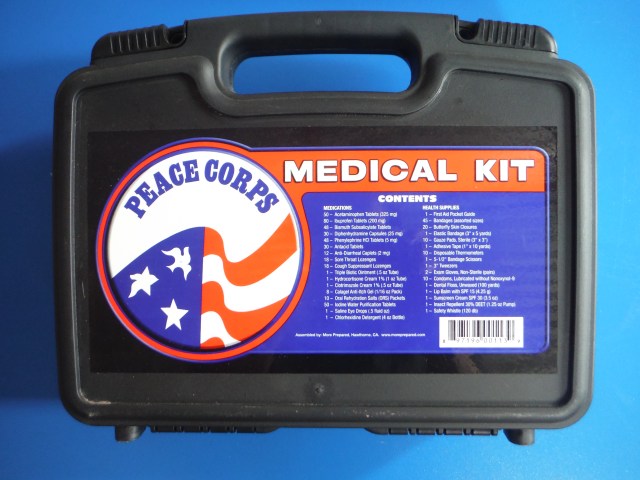
Medical kit

dscf3432

  • Acetaminophen
  • Ibuprofen
  • Bismuth subsalicylate
  • Diphenhydramine
  • Phenylephrine
  • Antacid
  • Loperimide
  • Sore throat lozenges
  • Cough drops
  • Triple biotic ointment
  • Hydrocortisone cream
  • Clotrimazole cream
  • Calagel anti-itch gel
  • ORS packets
  • Iodine tabs
  • Saline eye drops
  • Chlorhexidine detergent
  • First aid pocket guide
  • Bandages of assorted sizes
  • Butterfly skin closures
  • Elastic bandage
  • Gauze pads
  • Adhesive tape
  • Disposable thermometers
  • Scissors
  • Tweezers
  • Gloves
  • Condoms
  • Floss
  • Lip balm
  • Sunscreen
  • Insect repellent with 30% DEET
  • Safety whistle
    *We also received a digital thermometer, Plan B for females, and Coartem, a malaria treatment, if living in the malarious area. OTCs available from the med office include fiber packets, antihistamines

Food hamper (The food hamper is complicated. We were told to share with our PST family but to keep the items we could not live without. From the discussion, I understood the food hamper to be a way to help our training families offset having a Trainee live with them for eight weeks. They were to feed us dinner for two weeks and all other meals were on our own. Everyone ended up sharing differently and eating differently with their families. This will be another post someday.)

  • 2 flats of 30 eggs
  • Sugar
  • Salt
  • Flour
  • Canola oil
  • Oros, a orange drink mixed with water
  • Corn Flakes
  • Powdered milk
  • 2 bags of oranges
  • Rice
  • Samp
  • Beans
  • Corn meal
  • Potatoes
  • Onions
  • Butternut squash
  • Tomatoes
  • Carrots
  • Chicken
  • Beef
  • Chicken noodle soup packets
  • Aromat, a seasoning made with MSG
  • Tea
  • Coffee
  • Peanut butter
  • Baked beans
  • Canned tuna
  • Jam
  • Ground sorghum
  • Green bar soap
  • Matches
  • Toilet paper

For permanent site

  • 25 L jerry can
  • 100 L drum
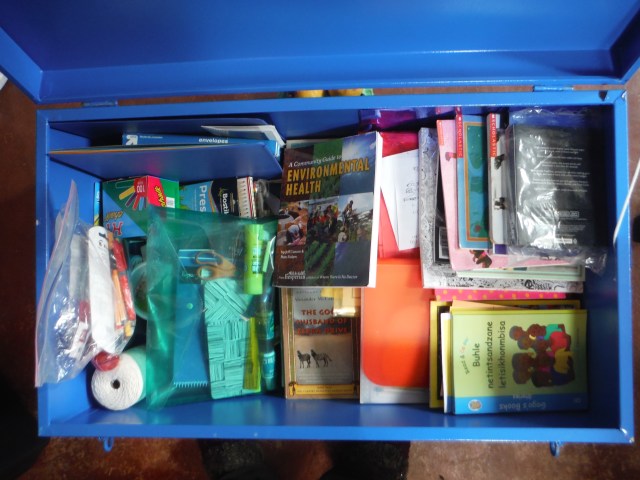
  • Blue trunk (Filled with school supplies.)

Blue trunk

dscf3431

  • Flip chart paper
  • Laminated paper
  • Stapler
  • Staples
  • Colored chalk
  • Masking tape
  • Note cards
  • Plastic folder
  • 2 steno pads
  • Scissors
  • Pensils
  • Eraser
  • Sharpener
  • 3 permanent markers
  • Pens: 2 blue, 2 black, 1 red
  • 12 colored pencils
  • Glue stick
  • White out
  • Staple remover
  • 2 inch binder
  • Sticky notes
  • Heavy duty clips
  • Paper clips in regular and large sizes
  • Push pins
  • Jumbo crayons
  • Water color set
  • Ruler
  • Sticky tack
  • Construction paper
  • Cotton twine
  • Children’s books locally made in English and siSwati
Posted in Africa, Peace Corps, Swaziland | Tagged , , , , , , | 5 Comments

Packing for Peace Corps Swaziland: Home supplies

Packing my non-clothes items was easier than choosing my clothes. There were many fewer questions about what I would use or could buy in Swaziland. I assumed I could buy nothing in Swaziland, which is definitely not the truth. I am able to buy almost everything I could want here, so remember that when buying more goods than can fit into your luggage. Of course, you pay more for more specialized items or for a higher quality, but you can find it here.

In regards to toiletries, Clicks, a drugstore (it also sells tortilla chips!), and Spar, a European grocery store, seem to have the best variety of name brands. You should be able to find suitable replacements here unless you are extremely picky. Most deodorant choices are roll-on, with a regular stick costing more, but there are still American brands available. I am happy that I brought at least one additional item of all my toiletries, especially because it is one less item to purchase at the beginning.

I am happy with everything I brought, what I have purchased here, and with what I have had sent. That said, I could have brought only clothes, electronics, and food and bought the rest here.

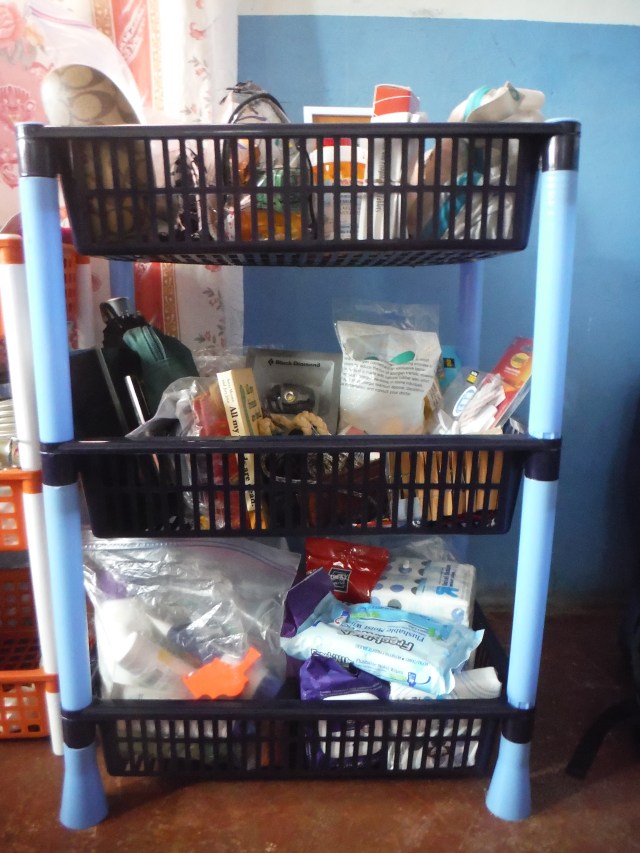
dscf3434

These units with three shelves are how I stay organized.

And now, this list:

Kitchenware and food

  • Wooden spoon
  • Mixing spatula
  • Measuring cups
  • Plastic turner
  • Recipe box
  • Kitchen shears
  • Heavy-duty hand can opener
  • Scraper, a tiny thing used to help scrape food off surfaces it is stuck to
  • Liquid measuring cup
  • 2 hand towels
  • 2 pairing knives
  • Lid gripper
  • 2 potholders
  • Reusable silicone muffin cups
  • Trail mix
  • Granola bars
  • Jerky
  • Hot sauce
  • Salt and pepper (Bring the pepper with you or make sure it is one of the first things you buy. Grinders and peppercorns are available.)

What I have bought

  • Peeler
  • Measuring spoons
  • Nonstick skillet
  • 8×8 pan
  • Glass loaf pan with lid
  • Spices (Make your own taco seasoning with cumin, cayenne, and garlic, and all the pumpkin pie spices are available too)

What was mailed

  • French press coffee thermos
  • Coffee
  • Grinder
  • Grater
  • Tupperware
  • Plastic dishes
  • Whisk

Camping

  • Compact two person tent from Sierra Designs (lots of good pro deals are available with Kelty, Marmot, and Cascade Designs, so do not buy from REI or another such store unless you are getting a really good deal. Check backcountry.com if you do not want to get a pro deal.)
  • Sleeping bag from Big Agnes (Big Agnes makes great bags particularly for car campers because the bag does not have padding on the bottom, because if you drove to your campsite, you will bring something more substantial than a sleeping pad to sleep on. Unfortunately, I will not be car camping in Swaziland, so I also have to carry a sleeping pad.)
  • Sleeping pad from Thermarest (Get a pro deal from Cascade Designs to buy yours.)
  • Daypack from Marmot (Pro deal purchased.)
  • 2L Hydromedary water bladder from MSR (Purchased with a Cascade Designs pro deal. I would recommend this bladder because it is made from a heavy material that will not rip and is a hydration system.)
    Whistle

Electronics

  • DSLR camera (I do not take it out at home to keep it safe. I also have an extra battery.)
  • Pocket camera from Fuji that is wind, water, sand, and drop resistant (I’m not afraid to pass this one to the children.)
  • Computer
  • Smart phone (essential for the use of WhatsApp)
  • Mini speaker
  • The bunny phone, my backup, unlocked flip phone from 2008. I hate this phone, but it still works, so it will continue to be my backup.
  • SteriPen (I bought this for my first trip to Africa in 2014 and it has worked great. It is rechargeable, so it needs electricity. There are other versions that do not. I have not yet had to use it in Swaziland, but may need to while traveling.)
  • External hard drive (The PCV movie and book selection is vast.)
  • Portable battery
  • Solar panel from Goal Zero (I have not needed this, although if I was in the other training village I would have, so I am happy I have it. There are also a few permanent sites without electricity. The panels from Solio are also recommended.)
  • Outlet converter
  • More complex outlet converter with lots of plug and USB space
  • Flash drives
  • Black Diamond Titan Lantern (Not the lantern I was going to choose because it does not have a crank or solar power, but it was such a great deal at the BD warehouse sale that I bought it and rechargeable D batteries. I use it every night.)
  • Petzl headlamp (A required item for everyone coming to a country without guaranteed electricity. There are other brands, but Petzl is the foremost. There are rechargeable headlamps, but they are not worth the cost. Simply use rechargeable batteries in your headlamp.)
    Rechargeable and regular batteries in AAA, AA, and D sizes (All are available in Swaziland.)
  • Clock and indoor/outdoor thermometer from LLBean (This has worked extremely well and I enjoy knowing the temperature. It even will tell you if there is likely to be ice outside. I wonder if that will ever happen in Swaziland.)

Medications and health supplies (I brought so much in this category because I already had it, and I wanted to make sure I had access to whatever I thought I needed upon arrival because it was unclear when we would receive our med kits. Some of what I brought was in the kits, and some is available from the medical officer. I have used almost everything, which tells you I have had colds, coughs, lots of bug bites, a sore back, nausea, diarrhea, constipation, and sleepless nights all in a matter of 14 weeks. So much for never getting sick.)

  • Three-month supply of all prescriptions
  • 2 mini first aid kits
  • Small tissue packs
  • Hand wipes
  • Lotion
  • Eucerin cream (there is an abundance of Vaseline here, so unnecessary.)
  • Icyhot
  • Hydrocortisone cream
  • Acetaminophen
  • Bag Balm
  • Cough drops
  • Meclizine (anti-nausea)
  • Clotrimazole cream
  • Loperamide
  • Pink bismuth
  • Loratadine
  • Bisacodyl
  • Migraine medication
  • Tums
  • Guaifenesin tabs
  • Cetirizine
  • Thermometer
  • Sunscreen
  • Miralax
  • Bug spray and cream
  • Lip balm
  • Docusate sodium
  • Benadryl
  • Bandages
  • Bug spray (a DEET spray and cream, and a lemongrass and eucalyptus spray)

Toiletries

  • 1 quart bag of travel-sized toiletries
  • LLBean hanging bag to hold toiletries (Love this for staying organized!)
    1 3-oz. bottle of each: shampoo, conditioner, and shower gel (These lasted all of PST.)
  • Loofa
  • Pumice stone (Essential for keeping your feet closer to their original color.)
  • Toothbrush and cover (plus one extra)
  • Toothpaste (plus one extra)
  • Comb and brush
  • Deodorant (plus three extras)
  • Face wash (plus one extra)
  • Retainers
  • 2 wash cloths
  • 1 large and 1 small quick dry towels from Pack Towel (Purchase with a Cascade Designs pro deal.)
  • 2 bars of soap and containers (There is no hand soap at SIMPA, where our dorms were and where the training classes were held. Bring your own.)
  • Tweezers
  • Small scissors
  • Nail clippers
  • Floss
  • Razors
  • Qtips
  • Tongue scraper
  • Small assortment of pads and tampons (With trash being a very complicated problem in Swaziland, I would recommend switching to products with less waste, reusable, or skip your period entirely by taking birth control continuously.)

School supplies

  • 4 children’s books
  • Crayons
  • Scissors
  • Photos
  • Pens
  • Notebook
  • Expandable folder with important papers
  • A silly book called All my Friends are Dead
  • Sticky notes
  • Paper clips

Jewelry and glasses

  • Necklaces and bracelets
  • Headbands
  • Bobby pins
  • 3 watches
  • Makeup
  • Hair ties
  • Prescription sunglasses
  • 2 pairs of glasses (required)
  • Leftover contacts (Peace Corps does not recommend wearing them. They will be fine at my site.)
  • Contact solution
  • Regular sunglasses
  • Eyeglass repair kit

Water bottles

  • Nalgene water bottle
  • Klean Kanteen water bottle with a no-spill top
  • Hydroflask water bottle that is insulated

Tools and gadgets

  • Command hooks
  • Clothes line
  • Rope
  • Leatherman multi-tool (some kind of knife is recommended, and tools are recommended for your permanent site, so this covers most of your needs. Pro deal is available.)
  • Pocket knife
  • Duct tape
  • Metal clips (Bring or buy clothespins upon arrival.)
  • Heavy duty padlock
  • Carabiner
  • Umbrella
  • Reusable latex gloves (I have even seen these in Swaziland!)
  • Balloons (So happy for these to be a surprise later for one of my brothers who says he loves balloons.)
  • Money belt
  • Settlers of Catan
  • Deck of cards
  • Lanyards
  • Sewing kit
  • Reusable shopping bag (Had two big, beach-sized bags sent. They are really helpful for keeping all your items together on public transportation.)

Of all the items mentioned above, I purchased a variety of items from Cascade Designs and my solar panel with a pro deal. Everything else I purchased at full price or during sales.


Posted in Africa, Peace Corps, Swaziland | Tagged , , , , , | 1 Comment

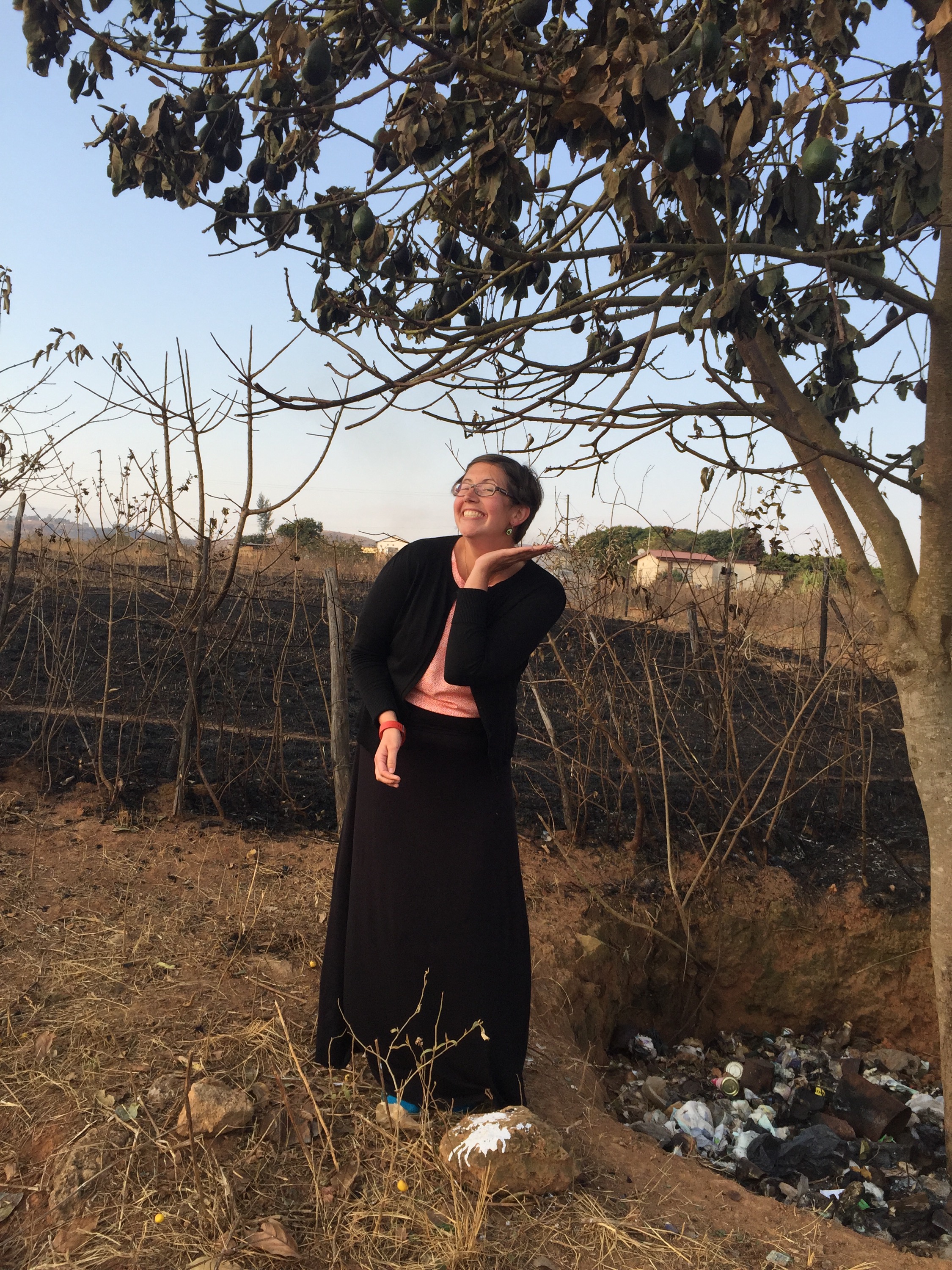
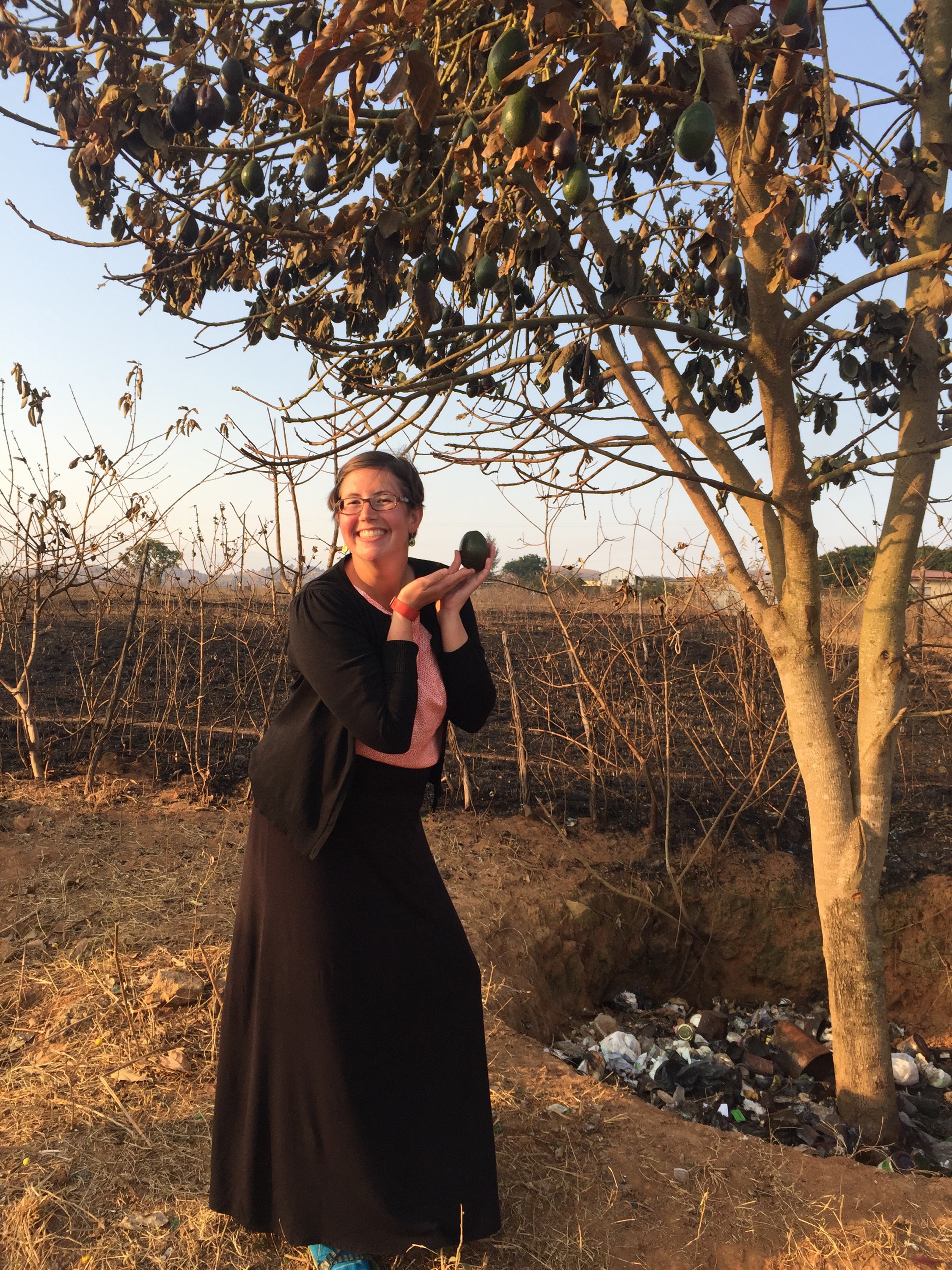
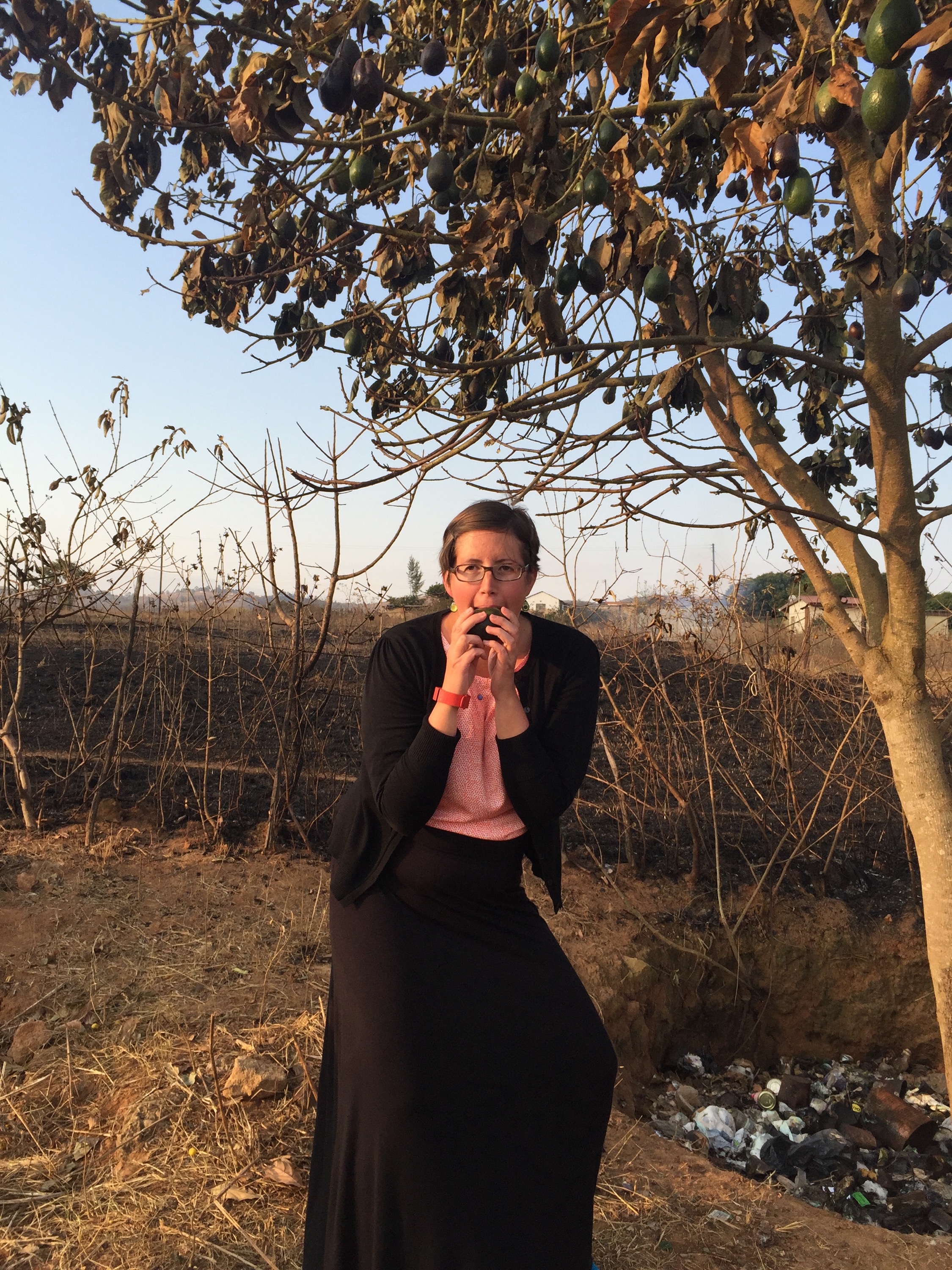
Wednesday photo: Avocado earrings

Near the end of PST I casually mentioned to one of my bosisi that I had avocado earrings or emacici emakotapeni. She did not believe me, so I put them on and was paraded around the homestead so she could show off one of the funniest things she had ever seen. 

We ended at the avocado tree, which had been sadly burnt and been crippled by the neighbors earlier that week. They were burning the field next to us and weren’t watching the fire. Soon in engulfed the avocado tree, a free source of healthy food for a family that desperately needed it. Make was livid. It was the only time I saw her angry. 

The tree was still laden with avocados that now were charred and the leaves were crispy. But we still had the funniest photo shoot ever. Please ignore the old trash pit under the tree. That’s just life in Swaziland. 


Posted in Africa, Peace Corps, Swaziland, Wednesday photo | Tagged , , , , , , , | 4 Comments

Packing for Peace Corps Swaziland: Clothing

Choosing what clothing I would bring to Swaziland was difficult. There are so many unknowns about the weather, clothing styles, and attitudes toward females wearing pants that depend on your family and/or your community.

Of course, I had consulted many lists from other Peace Corps blogs and Peace Corps Swaziland provided a very last-minute list from the group of Volunteers that arrived in 2015, but I still did not know what I would need.

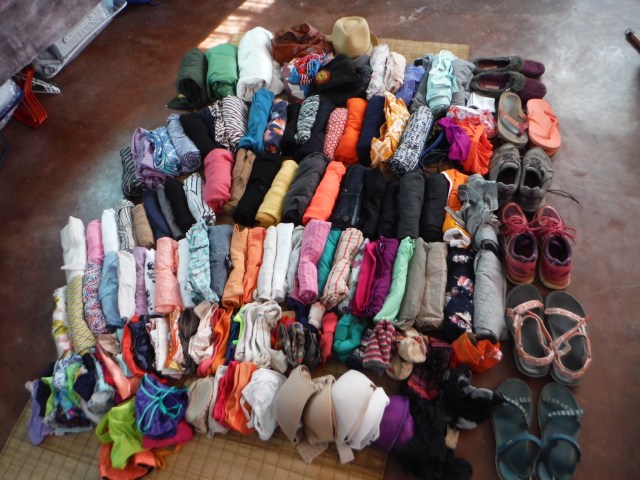
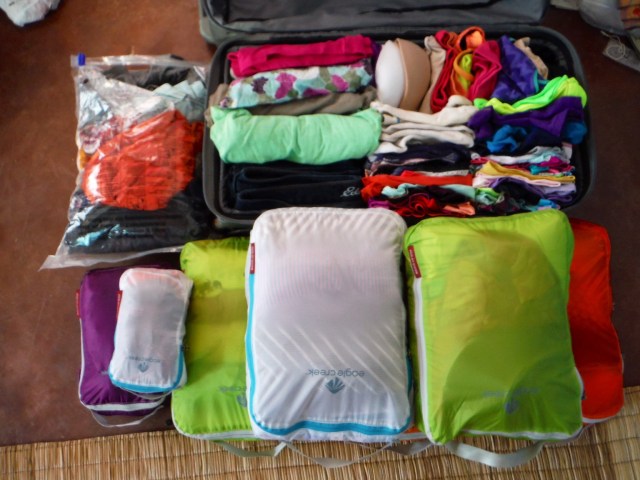
Organized clothing

All of my clothes reunited and sorted on the day I moved into my permanent site.

I started organizing my clothes by dividing my closet into what I would like to take and what I knew I would not need. This was at least twice as much clothes as I ultimately brought. I spent hours searching for maxi skirts without slits, which I had never worn before, and matching them to tops because I needed to be able to mix and match.

I did not want to spend too much money on anything I bought because the piece of clothing would most likely be destroyed in two years, but it also needed to be durable enough to last those two years. I had many durable selections from Eddie Bauer already in my clothing collection, and I found good items at Nordstrom Rack (huge selection online and you can search by skirt length), Kohl’s, JCPenney, Old Navy, and Target.

My advice is to prepare to be extremely modest and you will learn with time what is acceptable at home and in your community. This means shirts with sleeves and long skirts or dresses for women and shirts with sleeves and dress pants for men.

Sorted clothes

Everything sorted and stowed in my suitcase and bags.

My dress style has evolved to include many cardigans, and they will be very important to provide arm coverage when needed or when Make wants you to be protected from the sun when it is 90*. Long-sleeve cardigans were great for our training period when it was cold outside and inside, but now I am wishing I had brought short-sleeve cardigans as well, to cover my shoulders when needed but also attempt to be less sweaty than I am with long-sleeves. (Thanks, Mom, for finding some for me!)

Pants are complicated. The young-adult females in my training family always wore pants. The only pants I had brought with me were my yoga pants (bring yoga pants/leggings in all lengths for wearing under skirts or relaxing!) and capris. My Make and other family members would laugh at me when I would show some leg with either the capris or knee-length skirts, but they were not being mean, and I was definitely allowed to wear the pants and knee-length skirts. We had “jeans days” during PST, so it would have been nice to have jeans to wear.

At my permanent home, my Babe is a member of the traditional council, so my household is more traditional than others. Females should not wear pants, but my younger bosisi are allowed to wear short skirts. I have worn pants at home when cold or when traveling somewhere, but they are not part of my regular wear and I still have not worn my jeans. I have worn shorts on hot days, and anytime I go outside, I wrap a lihiya, or piece of traditional fabric, over my shorts to be better covered up or put on a skirt. Babe liked that I was wearing a lihiya but I received further questions from Make. I revealed to her that I was covering up my shorts and I could not decipher her reaction.

Additionally, my bosisi are not allowed to wear nail polish, which is something I contemplated bringing and am glad I did not. If I ever decide I need to paint my toenails, nail polish is available in Swaziland.

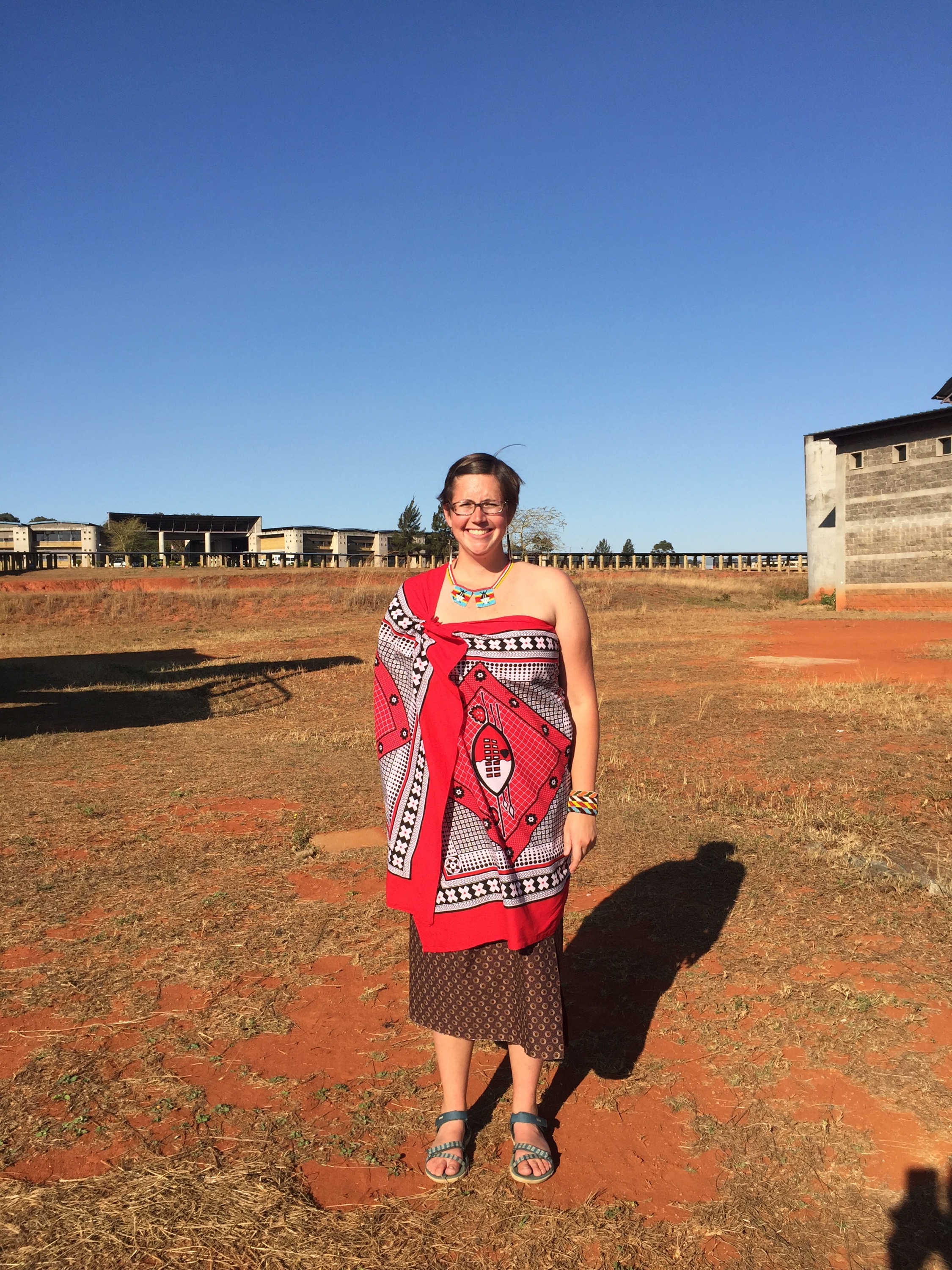
On the other hand, wearing a traditional outfit that shows lots of skin is perfectly acceptable any time of year and is an excellent outfit choice for PCVs because Swazis of all ages get so excited to see us traditionally dressed. Men and unmarried women wear more or less the same fabric pieces but tied on different sides. Married women have a much more complicated outfit. The traditional outfit leaves one shoulder bare, along with the lower legs and a part of the upper leg on the side the lower fabric is tied. At Umhlanga, I was scolded for holding the bottom fabric closed.


traditional swazi dress

Dressed in the traditional outfit for swearing in.

I know that I could push my Babe’s rules if I so desired because even though I am a liked family member, I am also seen as a guest with more leniency. I plan on living happily with this family for two years and I want to live as much like them as possible, particularly in my current Peace Corps stage of Integration.

Finally, my clothing list.

Jackets

  • Lightweight Patagonia puffy
  • Rain coat
  • Lightweight water-resistant jacket from Eddie Bauer

Scarves

  • 1 thick scarf
  • 1 thin scarf

Hats

  • Straw fedora from San Diego Hat Company (I am so glad I brought this even though I had to pay it special care while flying. Absolutely worth it to bring a good hat.)
  • Lightweight ball cap
  • Winter headband (I have worn this inside on the coldest days.)
  • Winter hat (Have not used yet)

Pajamas

  • Long-sleeve shirt and flannel pants
  • Short-sleeve shirt and light pants
  • Short-sleeve shirt and shorts

Shoes

  • Slippers (So happy to have these. I am wearing them right now.)
  • Plastic flip flops for hostel showers
  • Regular flip flops for my inside shoes (Floors here are usually concrete.)
  • Hiking shoes
  • Asics sneakers (I wear these almost every day for all long walks.)
  • Teva Hurricane XLT sandals (My homestead and shorter walks shoes. Teva also has a great pro deal for PCVS!)
  • Teva sandals that are a bit dressier (These were my dress shoes for PST.)
  • Brown flats (I had these mailed. I will not wear them on long walks, but take them with me when needed.)

Swimsuit

  • 1 bottom
  • 1 tankini top (I know of a couple pools in Swaziland, and it would be inappropriate to be less covered than this.)
  • 1 bikini top

Dresses

  • 1 business dress (I wore this to a special event at the Embassy and it would have been appropriate for swearing in. It is dry-clean only, of which there happens to be a dry cleaner in my closest shopping town and I also saw one in Manzini.)
  • 1 maxi dress
  • 3 knee-length dresses (If the dress or skirt does not come to your knee when sitting down, I think it is too short for Swaziland.)

Skirts

  • 1 business skirt
  • 4 knee-length skirts
  • 7 maxi skirts

Pants and shorts

  • 1 jeans
  • 1 capris
  • 3 khaki shorts
  • 1 exercise shorts
  • 1 long yoga pants (I could wear these at my training home but should not at my permanent site.)
  • 1 capris yoga pants (I wear under skirts or dresses.)
  • 1 bike shorts (I wear under skirts or dresses. These are perfect for wearing under the traditional dress.)
  • 1 hiking pants from Eddie Bauer that are water-resistent

Upper layers

  • 1 quarter-zip pullover from Target’s C9 brand (These are my favorite lightweight layers.)
  • 4 long-sleeve cardigans
  • 1 elbow-length cardigan
  • 1 blazer that was mailed to me (Swazis dress nice and often put us to shame.)
  • *I wish I had brought a hoodie. I will likely look for one at the used clothing markets. Oddly enough, one of my bobhuti at my training family had a hoodie from an Ohio fastpitch softball team.

Tank tops

  • 6 narrow-width (Great for wearing under cardigans.)
  • 3 shoulder-width (These are shopping-town acceptable and I could wear them at home. They are not office or school acceptable.)

Dress shirts

  • 3 sleeveless (Same as tank tops above.)
  • 3 button-down short sleeves
  • 2 elbow length
  • 2 button-down long sleeves

Less-fancy/Casual shirts (These are essential because who wants to do chores at home in dress clothes, especially when you spend most of your time at home sitting on a mat on the floor. These are also great for traveling to other volunteers in Swaziland or for leaving the country. Everything I brought has been Make-approved.)

  • 7 short sleeves (One is a wrinkle-free, quick dry shirt from Eddie Bauer that I love.)
  • 1 long sleeve (It is regularly cold enough that I could have brought a second.)
  • 1 long-sleeve button down (Also a wrinkle-free, quick dry shirt from Eddie Bauer. It stays cool enough that I can wear this to be totally covered on the hottest days.)

The most casual of my shirts

  • 2 tank tops
  • 1 wicking shirt from Marmot (It is super soft and great for hot days at home.)
  • 1 regular t-shirt that sports my Utah and mountains love
  • 1 regular t-shirt from Peace Corps I was given at Staging

Underwear

  • 4 regular bras
  • 1 strapless bra
  • 9 sports bras
  • 36 pairs of underwear (I was happy I had about half of these with me during PST but wished I had all of them. Washing underwear was complicated because of my living situation. It is not now, so I could have made do with less.)

Socks and tights

  • 2 compression socks (Great for the 15 hours on the plane.)
  • 2 black footless tights (Great for added warmth in the winter. They are available here.)
  • 2 pairs socks to wear with dress shoes
  • 1 tall ski sock (Yes, I plan to ski in Lesotho next winter!)
  • 4 calf-length heavy-duty Smartwool socks (Check backcountry.com or Sierra Trading Post for these at a reduced price. I wore them every night during PST for sleeping and have worn them once or twice a week at my permanent site.)
  • 1 ankle-length hiking sock from Smartwool
  • 4 calf-length regular socks (4 pairs was not necessary.)
  • 9 short socks I wear with sneakers

Of all the items mentioned above, I only purchased one pair of Teva sandals with a pro deal. I packed my clothing in pro-deal purchased bags from Eagle Creek. I had tried both of these items before I had access to a pro deal. Everything else I purchased at full price or during sales, except for a few items from Target, which is where I worked and therefore received a minimal employee discount. Most of my wardrobe comes from Eddie Bauer, which has regular and excellent sales, and makes extremely durable and professional clothes for traveling and adventuring. Finally, I have received no compensation to rave about any of these items, and of course, all opinions are my own.

Posted in Africa, Peace Corps, Swaziland | Tagged , , , , , , , , , | 4 Comments

Packing for Peace Corps Swaziland

I love planning and organizing for trips. A 27-month adventure with the Peace Corps requires something very different than the usual trip, though.

I was offered a position in Swaziland as a community health volunteer many, many months before departure. That meant nothing to me, though, because I knew that receiving medical clearance would be more difficult for me than securing the job. Because of that, I could not pack until I received clearance, which was about 3.5 weeks before departure.

Talk about tying up every loose end, taking one last trip home, and packing on a deadline.

Having lived in Swaziland for three months now, I think I did a pretty excellent job packing. I did not forget or have to leave behind anything crucial. I had two big packages sent after arriving with useful items, including kitchenware and a blazer and dressier shoes.


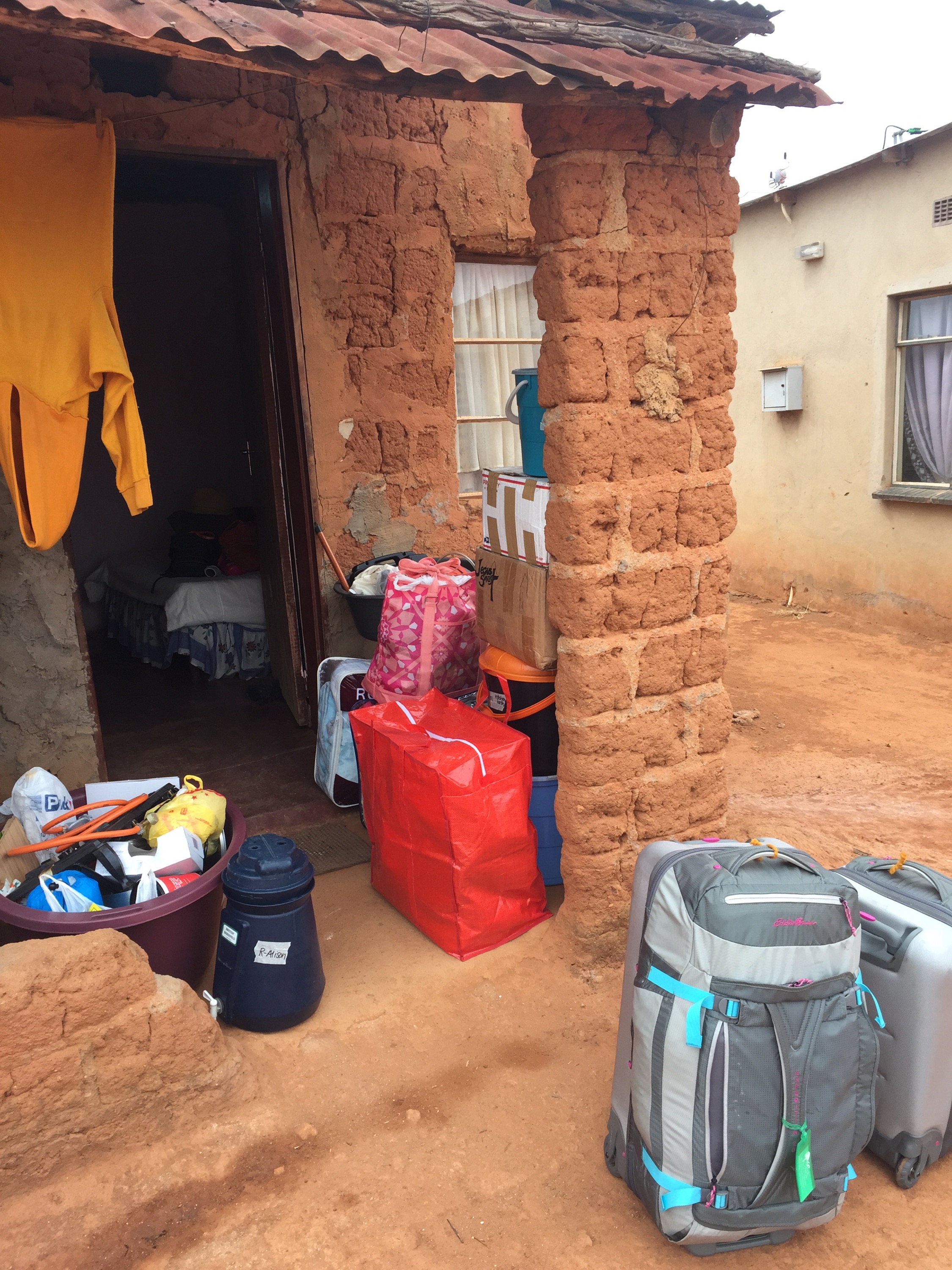
Moving out of my Pre-Service Training home

I packed enough of a variety of clothing and kitchenware to be satisfied and soon learned that most items are available in Swaziland.

I was allowed to bring two checked bags, one carryon, and one personal item for my travel from New York to Johannesburg. We could pay for extra weight or an extra bag, and I seriously considered paying for a third checked bag. It would have been impossible for me to carry, but it would have been cheaper to pay for the bag than mailing everything I would have filled it with.

I really did not want to be the person who brought three checked bags, though, which saved me a lot of struggle with maneuvering my bags. I had a really hard time carrying everything as it was, because I was not strong enough to heft my 50-pound backpack onto my back from the ground without dangling the bag from my left arm. Having either a chair or a friend to help was crucial. I even had an unbeknownst witness during much of my struggle because another Trainee from my group rode on the same shuttle as I did. I ended up arriving in Swaziland with a huge bruise on my left upper arm from the weight of my backpack.

I would have struggled less if I had two suitcases to check like the rest of my group, a medium-sized backpack as a carryon, and then a small personal item. I did not want to buy any new luggage because I already owned a high-quality and durable suitcase and carryon in addition to the hiking backpack.

All of my bags were just to the dimensions and weight limits. As a group, we realized that most checkin airline agents did not check the dimensions of our bags, and having bags with more wiggle-room would have been nice when packing for Pre-Service Training upon arrival in Swaziland. For PST, we have to leave one checked bag behind in the capital and find a way to cram all of our new materials into the baggage we have left. That was a challenge for me because my bags started out stuffed.

I brought about 50 pounds of clothing and shoes and about 100 pounds of everything else, spread amongst a checked bag, my carryon, and my personal item.

The most important thing I have learned about packing for the Peace Corps in Swaziland is bringing items you already like and use. There is no reason to waste crucial space and weight on things you will not use. You also need to bring a backpack or duffle for traveling because you will have to sit with your baggage on your lap while taking public transportation. Finally, having some kind of bags to separate items within your luggage has been stress-reducing. I love the quarter, half, and full bags from Eagle Creek’s Pack-It Specter Cube system. I roll my clothes and store like items together in each cube. You can even sign up for their pro deal with your Peace Corps acceptance letter to get 40 percent off your purchases.

And remember that it does get chilly in Swaziland. It will be cold during PST and could be cold during winter at your permanent site. It will also cool off immensely when the rains come. The 98-degree high at my site on Friday became 65 degrees on Saturday and then 55 degrees on Sunday due to the rain and cloud coverage. I was bundled up in my puffy, a hat, and gloves, just trying to stay warm.

Is there anything you wished you packed or did not pack for the Peace Corps?

Check back for what clothing I brought, the list of home supplies, and what Peace Corps gives us. There’s also three posts on favorite items: for PST, my overall favorite things, and my cohort-mates’ favorite things.

Posted in Africa, Peace Corps | 2 Comments

What’s cooking: Oatmeal muffins

As a Peace Corps Volunteer in Swaziland, I have a limited food budget. But I also love food–both eating and making it. During PST, I cooked without an oven, refrigeration, and a non-stick skillet. Now at my permanent site, I have all three, though at a cost. This occasional series will highlight my cooking and baking and the recipes I use.

I woke up today to an overflowing water filter with the water running down the side of my refrigerator, pooling on the floor. Fortunately all of my food on the floor near the water was either in glass or plastic, except for the oats.

About half of the container was moist and about a quarter of the oats. I spread them out to dry, but knew I needed to find a way to use some of them. In comes the oatmeal muffin.

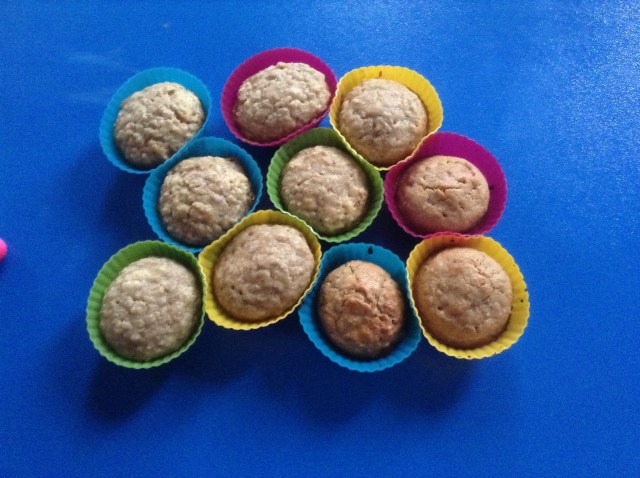
Oatmeal muffins

I found this recipe a few weeks ago when looking for muffins and desserts made with the ingredients I have on hand, and this one was one of the easiest. These require no baking skills and can be personalized with additions like nuts (if only they were not so expensive here!), raisins, cranberries, apples, or chocolate.

Total time: 1 hour and 30 minutes

Makes: 15 muffins

What do you need:

  • Stoven
  • Mixing bowl
  • Small bowl
  • Cup
  • Fork
  • Spatula
  • Measuring cups
  • Muffin tin or reusable muffin cups

Oatmeal muffin ingredients:

  • 1 C milk or 1 C water plus 3 tablespoons Nespray or other powdered milk
  • 1 C oats (need to be the quick cooking kind, like Jungle Oats)
  • 1 egg
  • 1/4 C oil
  • 1 C self-rising flour
  • 1/4 C sugar
  • 1 teaspoon baking soda
  • 1 teaspoon cinnamon (or more or less depending on your love of cinnamon)

Oatmeal muffin recipe:

  1. Preheat oven to 220* C.
  2. Combine milk and oats and let soak for 15 minutes.
  3. In a cup, mix egg and oil and add to oat mixture.
  4. In a small bowl, combine flour, sugar, baking soda, salt, and cinnamon. Add to wet ingredients and mix with fork until just combined. Add any additions such as raisins.
  5. Spoon into muffin cups until 2/3 full.
  6. Bake six muffins at a time for 19 minutes. Rotate rack in stoven half way through the baking time.

I ate the muffin with peanut butter spread on each half, which was quite tasty. The muffins are great for a quick snack and I am sure they are even better with raisins or apples. I will try that the next time.

Recipe is adapted from http://www.andthenwesaved.com.

Posted in Africa, Asia, Central America, Peace Corps | Tagged , , , , , , , , , , , | Leave a comment

Wednesday photo: Rhinos

Rhinos. Bobejane. One of the animals I saw in Kenya from very far away, but today that changed. 

 Rhinos at Hlane 
I’m at Hlane Royal National Park. As a volunteer, I am allowed just one night away from my site per month for the first three months. I chose my first night away to be here, where I can see some of the animals I have grown to love like elephants and giraffes and to see ones I have not had a close encounter with. 

Now I’m sitting at the watering hole waiting for elephants and also my impala curry dinner. There’s some nearby birds, hippos in the water, and some unidentifiable noises. Our guess is the naughty pig–which its name translates to in siSwati–the warthog. 

It is time to get back to watching now. 

Posted in Africa, Peace Corps, Swaziland, Wednesday photo | Tagged , , , , , , , , | 2 Comments

Wednesday photo: Umhlanga

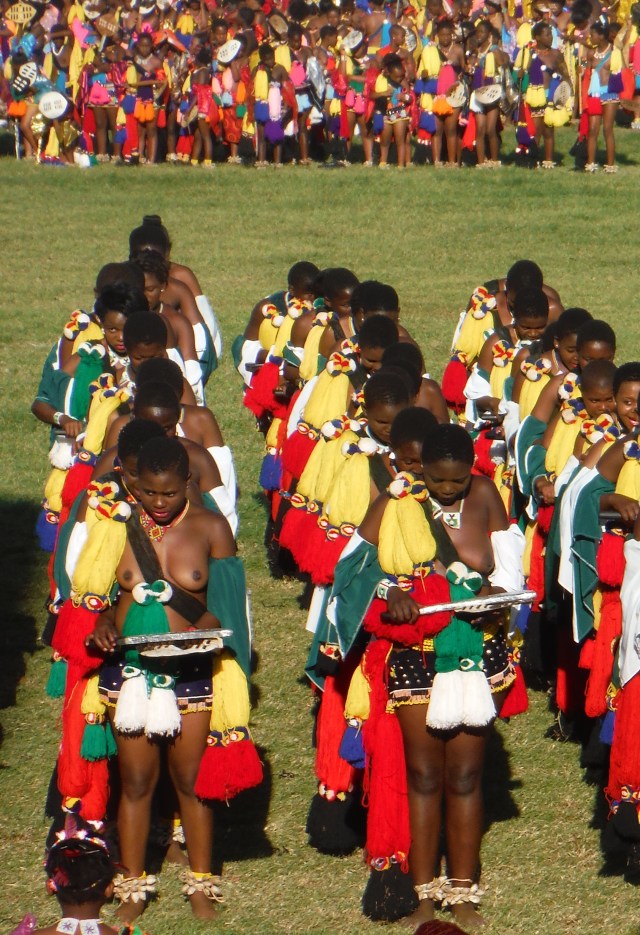
The Reed Dance, Swaziland’s most famous cultural event, is a week-long celebration of young females, called flowers. This year there were 98,000 participants, about 1/12 of the country’s population. Any female up to the age of about 22 can participate as long as she has not given birth. 

wp-umhlanga

One of the best coordinated groups of girls. They are bowing to the king.


The participants were lined up as if for a parade and marched like a marching band, although most did not do such a great job of guiding to the right to keep their lines straight.

Some participants wore the indlamu, the skirt seen in the photo, while others wore sidwashi, the traditional brown fabric lihiya. Some carried machetes or sticks. All sang and danced and stomped their feet. 

Babe said I can dance next year with my bosisi. I think I need to start practicing the footwork now. 

Posted in Africa, Peace Corps, Swaziland, Tradition, Wednesday photo | Tagged , , , , , , , | Leave a comment

Learning about my community and the art of saying no

It took just three months — and moving to my permanent site — for the Peace Corps life to get real, and difficult.

I have spent the last week living an easy life while meeting people at church and the community council meetings. I had a language lesson, met the chief and was officially announced as a citizen of my community, and toured the community with my mother, an ugcugcuteli, a rural health motivator and another of her colleagues.

My mother told me a few things during that tour that I have mulled over for a few days. She pointed out a few households without any living elders, she introduced me to a mentally disabled man she shared fruit with, and she stopped to buy chicken dust from a younger man she likes to support because he’s kute make na kute babe — without mother and without father.

On Saturday after I was introduced to the community by the chief and was walking home with my sisi, I met a woman on the street who was asking me about my work here. She specifically asked if I would help children without parents, to which I answered yes. She then asked if I would help her because her children do not have a father. She did not ask for anything specific, so I told her that I would be interviewing the community to determine its greatest needs. She seemed satisfied enough.

Her question, though, started my thoughts on how to say no to people asking me for something.

A few hours later, I was returning home again, this time from exchanging my empty propane tank for a full one in the closest town. I had made arrangements with one of my bobhuti to let him know when I was close to home on the public transportation, and he would start toward my stesh, or bus stop, to help carry the heavy tank home.

I exited the khumbi and was immediately offered help from two nearby young men. Their offer of help was followed up by asking for sodas in exchange for their help. I told them no thank you, that my bhuti was coming to help me. And then they reprimanded me for turning down their help. They said because I was living in their community in order to help them, that they needed to help me, which is a thought I hope many community members have.

I said I wasn’t buying them sodas to help me when my bhuti was already on his way. They followed that up with asking me for my phone number, so that they could contact me when they needed help. I said no, knowing that it was not safe for me to give my phone number to unfamiliar young men, and I also assumed that everyone in the community knows which family I live with. If someone needs me, they can easily find my family.

They finally moved onward, and I was able to cross the road and head toward home to wait for my bhuti.

Then the chicken dust salesman, the one make told me about a few days earlier, comes to take the propane tank from me. I try to stop him, telling him that Mancoba is coming to help me, that he does not need to leave his stand. He insists, and hefts the tank on his shoulders, walking it toward my home. He introduces himself to me, saying he is doing the job of women, cooking chicken on the side of the road just to earn some money. Won’t I support him sometime?

I answer of course as he passes off the propane tank to my brothers, because two of them came so that they could carry the whole weight of the tank.

I had decided that I would have to support his chicken dust business after knowing his story. I was already taking turns buying from the different fruit and vegetable sellers, and I was also happy to have such a nice general store, which would be easy to support.

I pinch pennies, but I also have a heart. My mothers have taught me well.

This brings me to wondering again, how do I say no to people? How hard will it be to say no to people while working as a Peace Corps Volunteer in Swaziland once I know them?

I had a taste of this during Pre-Service Training when I was asked for food from various members of my training family, sometimes when they needed it and sometimes when they did not. Some of these moments were awkward, but life always continued to move forward regardless of my answer.

Here, things will be different. Soon, the people in my community will no longer be strangers. I will learn people’s stories. Soon, we will have expectations about each other. I know my community is a bit hesitant about their newest community member, and at the same time, I also know they expect great things from me.

I know my community will ask me for things I cannot provide. I cannot bring piped water to every home in the village. It will be hard enough to get one borehole drilled for a water source, let alone the four or five I know my community would like.

How do I get them to start small, for both our sakes? How do I not disappoint them? How do I avoid making their lives worse, as I know project failures can sometimes do? How do I get them to participate if they think they have too much to lose or if they do not trust me? How do I stay within the project goals Peace Corps requires of me?

These are just some of the questions I will have to think about each day. These questions are what will keep me learning and looking for ideas and suggestions on how to bring the knowledge and skills and improved health my community wants to them. These are the questions that will form my next two years here and the relationships that I build.
Reading: In the Company of Cheerful Ladies by Alexander McCall Smith

Posted in Africa, Life, Peace Corps, Swaziland | Tagged , , , , , , , , , | 4 Comments