What’s cooking: Tacos

As a Peace Corps Volunteer in Swaziland, I have a limited food budget. But I also love food–both eating and making it. During PST, I cooked without an oven, refrigeration, and a non-stick skillet. Now at my permanent site, I have all three, though at a cost. This occasional series will highlight my cooking and baking and the recipes I use. 

Everyone says they miss Mexican food while in Swaziland. I wondered why when all the ingredients are available here, including homegrown avocados. The most non-Swazi part of tacos are the tortillas and the non-stick skillet required to make them. 

 

Tacos!

 
My first purchase for my new home was a non-stick skillet. I bought the 28 cm aluminum skillet from Shoprite for E139. It will be worth every penny. Everything else can be bought at most grocery stores and bomake markets. 

Preparing the filling is easily adaptable to your dietary needs and tastes. I used mince (ground beef), onion, green pepper, and tomato. I spiced the filling with garlic, cumin, and cayenne. I bound everything together with a tiny can of tomato paste. You could easily use chicken or beans instead of the beef and any other veggies of your choosing. 

And the tortillas. I use four ingredients (no lard or other fat!) and they are so easy. The key to a soft tortilla is not greasing the skillet and giving the dough a few minutes to rest between steps. 

Total time: 1 hour and 15 minutes

Makes: 6 tortilla shells with enough filling left over for another day

What do you need:

  • 1 burner
  • Non-stick skillet
  • Plastic spatula
  • Mixing bowl
  • Cutting board
  • Chopping knife
  • Can opener
  • Measuring cups
  • Rolling pin (I used a pasta sauce bottle)
  • Clean, flat surface to roll out tortillas
  • Plate for the tortillas once cooked
  • Towel to cover dough and wrap cooked tortillas

Tortilla ingredients:

  • 1 and 1/4 c flour 
  • 1/2 c water
  • Two pinches of baking powder
  • One pinch of salt

Filling ingredients:

  • 1/4 kilo mince
  • 3 small tomatoes
  • 1 green pepper
  • 1 small onion
  • 70 g tomato paste
  • Garlic powder to taste
  • Cumin powder to taste
  • Cayenne powder to taste
  • 1 avocado
  • Cheese

Tortilla recipe:

  1. Measure the ingredients into a mixing bowl. 
  2. Mix together with a fork. 
  3. Knead dough with your knuckles or bottom of hand by folding dough in half and pushing down. Rotate dough in quarter turns, kneading until dough is elastic. Add more flour if dough is sticky or water if not pliable. 
  4. Cover and let dough rest for 5 to 10 minutes. 
  5. Pull dough apart into 6 pieces and form into balls. 
  6. Cover and let rest again for 5 to 10 minutes. 
  7. Lightly flour your clean, flat surface and your rolling pin. 
  8. Roll out each ball, rotating roll direction to keep circular, until it is about 5 inches in diameter. I flip the dough after every couple of rolls to keep both sides floured. 
  9. Turn on your burner. When your skillet is warm, add your first tortilla. Cook about 1 minute per side until dough starts to change color. 
  10. Finish cooking tortillas. 

Filling recipe:

  1. While the dough is resting from the tortilla recipe, organize ingredients and start chopping veggies for the filling. 
  2. Brown mince in skillet. 
  3. Once cooked, add chopped vegetables, tomato paste, and spices. Cook until vegetables and tomato paste are heated. 
  4. Add filling to tortillas and garnish with avocado and cheese as desired. 

Enjoy your tasty tacos and have happy travels! 
Posted in Africa, Peace Corps, Swaziland, What's cooking | Tagged , , , , , , | 3 Comments

Wednesday photo: Bomangoza! 

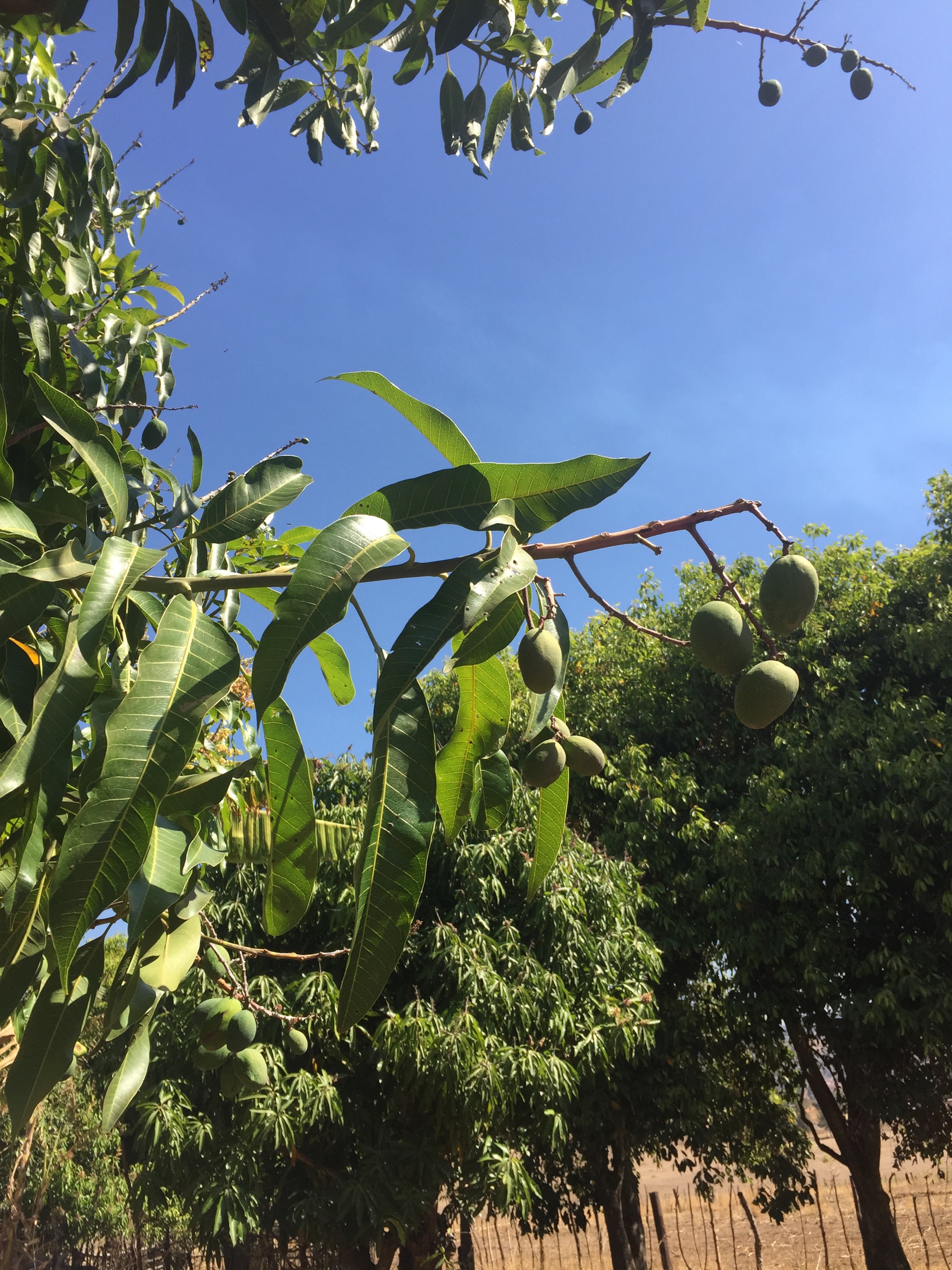
Spring sprung earlier at my permanent site in the bread basket of Swaziland than in my training village. I left peach blossoms to find peaches already growing and what’s even more exciting, the first mangoes are already growing!  

Baby mangoes, with more mangoe trees in the background


My family explained they have a variety of mango trees, even though I thought all the trees looked the same. I’ll have to learn the differences. One variety is called fish, because of its shape. Another had a name that matched its smell. 

I was told that the fruit should be ready starting in December. My Swazi family doesn’t can or make pies, so I have lots to teach them! 


Posted in Africa, Peace Corps, Swaziland, Wednesday photo | Tagged , , , , , , , , , , , , , , | Leave a comment

Wednesday photo: My bosisi

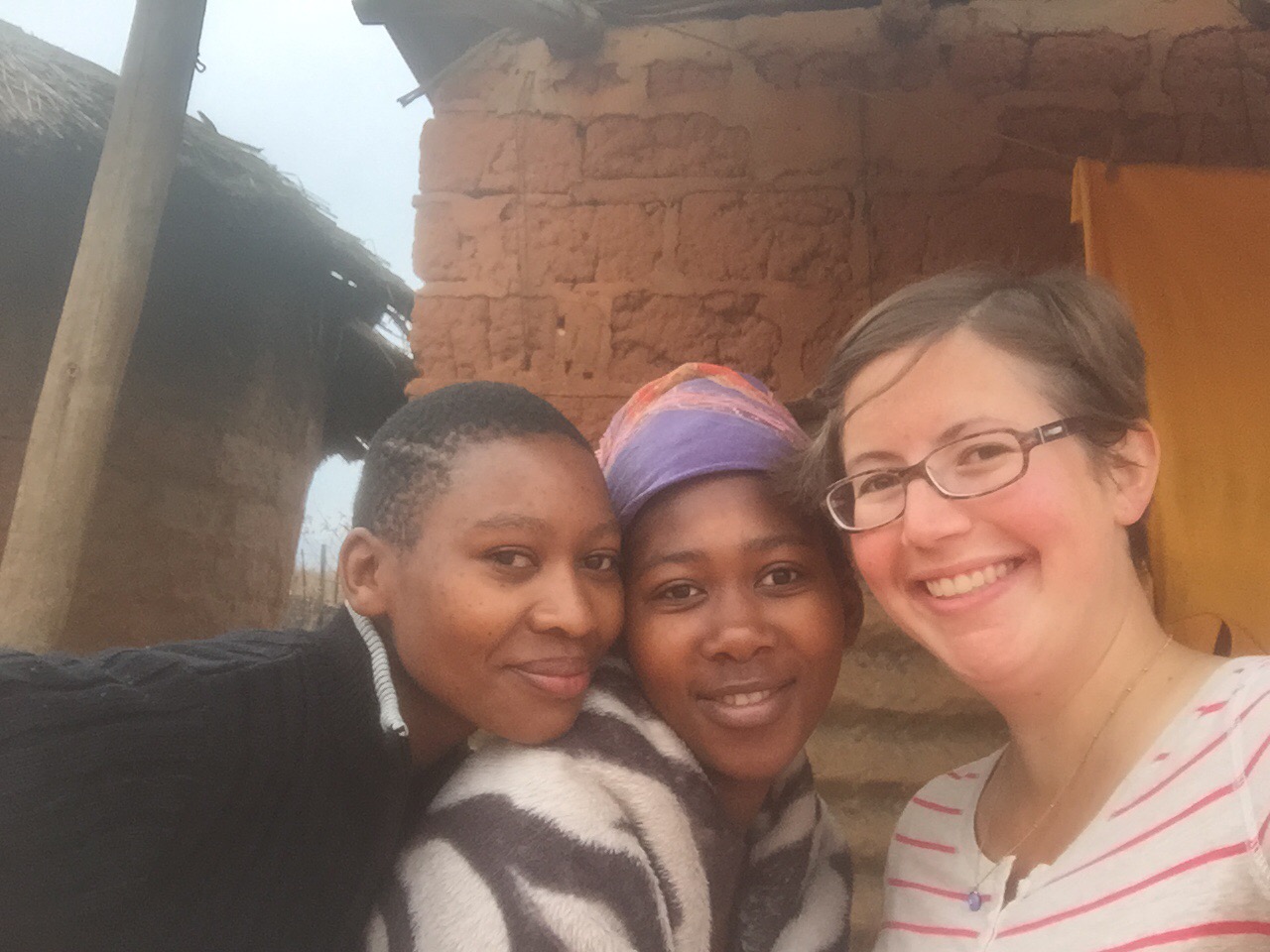
This last weekend I moved out of my training family’s home to prepare for Swearing In. I will write about my family soon, but as a preview, I wanted to share a photo with two of my older bosisi before I got teary-eyed about my departure. I will miss them and their families, but I will be able to visit them easily. I look forward to staying in touch with them and watching the little kids grow up. 


Posted in Africa, Peace Corps, Photos, Wednesday photo | Tagged , , , , , , | Leave a comment

Wednesday photo: Care packages, coffee, and cheese

Two packages arrived from home last week filled with kitchen gadgets and clothing that I hadn’t had room for and a few things I realized I could use and had not yet found here in Swaziland. 

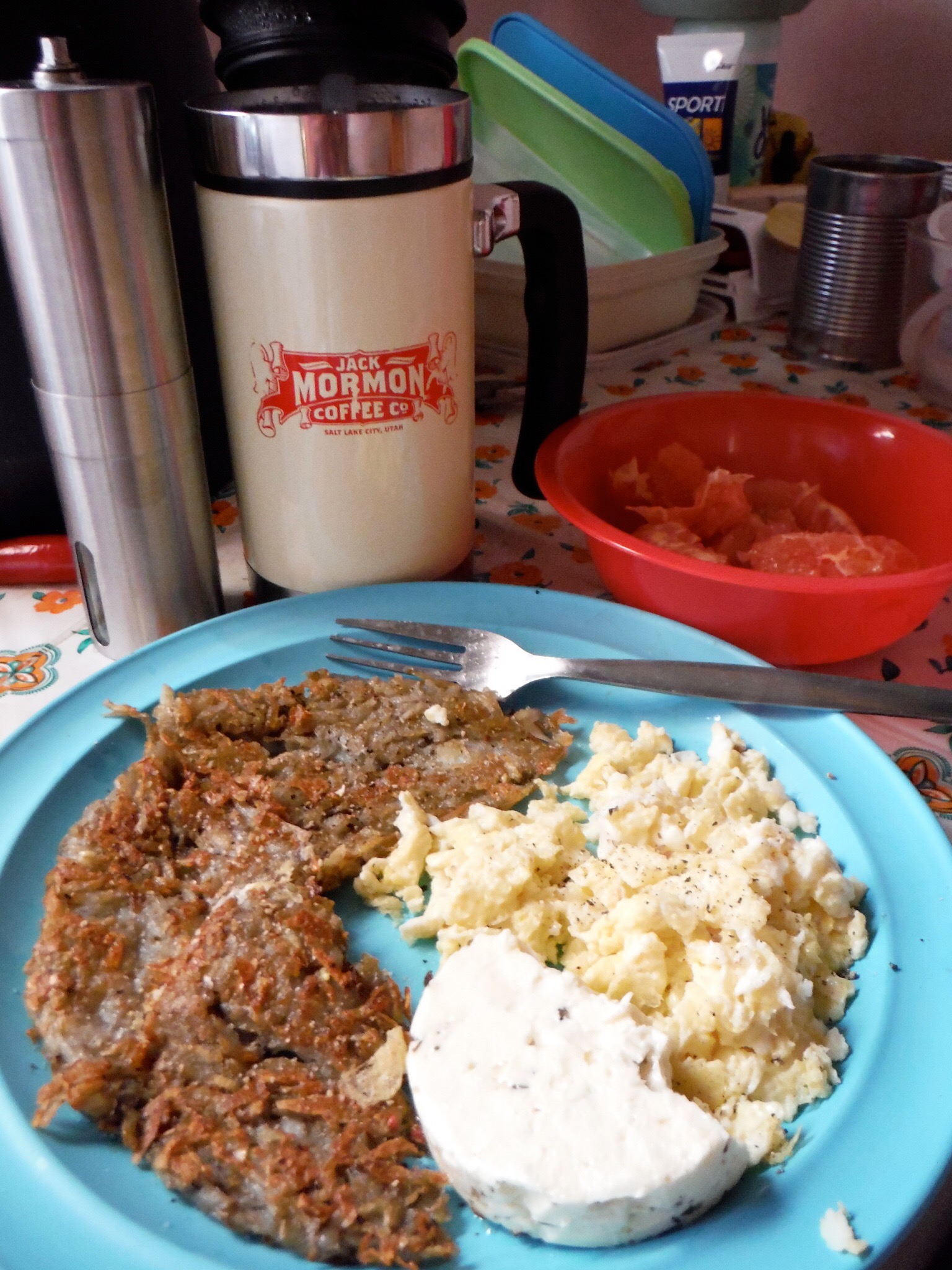
I may have been the most excited about my Jack Mormon coffee and mug. On Sunday morning, the only day we do not have class, I had a lazy morning with scrambled eggs, hash browns with my newly arrived grater, feta (yes, feta is available in Swaziland!), grapefruit, and a great cup of coffee. It was an excellent morning. 

  
I really love receiving mail, even letters. Sending a package here is really expensive, so I’m not asking for packages. But send me letters! 

Posted in Africa, Peace Corps, Swaziland, Wednesday photo | Tagged , , , , , , , , | Leave a comment

Wednesday photo: Permagardening

I have been so excited about gardening since I arrived in Swaziland. I asked for a garden at my permanent site, and boy, did Peace Corps deliver! I have about 30 fruit trees (mango, peach, banana, lemon, grape, papaya, and litchee), corn fields, and a lovely vegetable garden (tomatoes, peppers, chard, and lettuce). But I digress.

Peace Corps teaches a type of gardening called permagardening, which is a type of garden with a built-in water retention system and double-dug, raised beds to decrease planting space while increasing
yields. Peace Corps provided one training and one practice session (along with a visit to a local permaculture center called Guba) before we had to build a permagarden on our own.

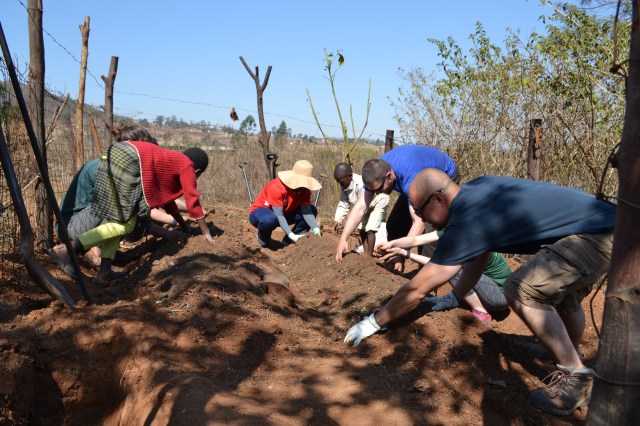
My language group plus another and their pick-axe-wielding powerhorse of a teacher built our own garden at my family’s homestead. My sisi nearly cried out of excitement when I brought her a few leftover plants a couple weeks ago, so I knew I had found someone who would
attempt to care for our hard work.

DSC_0815

Mixing the soil with manure, ash, and charcoal.

She watched in confusion for hours on Sunday while we built a garden unlike any she had seen before. She let us do our thing until planting time, when she spaced the seedlings much closer together than I was anticipating, which is the opposite of what we were told to expect.

DSC_0834

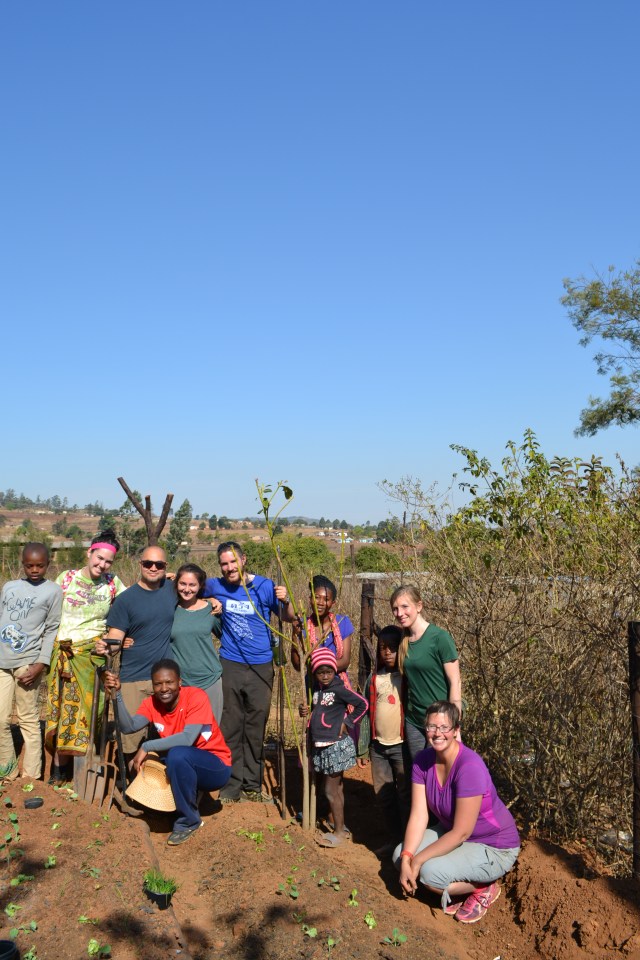
Most of the group

All of the children were excited to help work in the garden and the whole family has been concerned about protecting the seedlings from the chickens. So far, all is well with the garden, and I look forward to checking up on it every so often since my permanent site is nearby.

Posted in Asia, Life, Peace Corps, Swaziland, Wednesday photo | Tagged , , , , , , , , , , , , | 6 Comments

Wednesday photo: Eating sugarcane

 
Sugarcane grows across Swaziland in large company fields and in home gardens. Some of it stays in Swaziland as processed sugar (only local brands available at the store!) and much is exported. But what most homegrowers use sugarcane for is a sweet treat. 

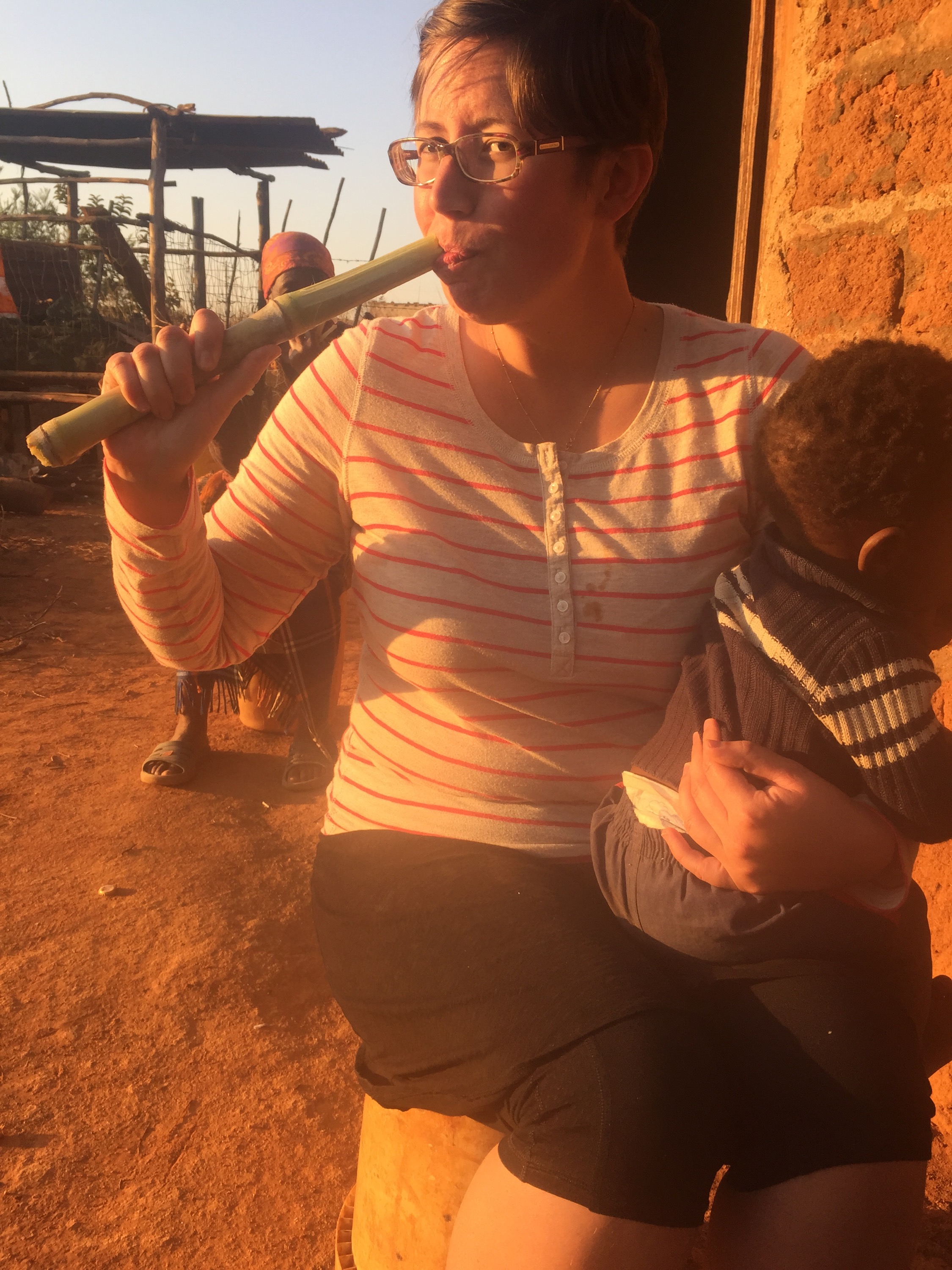
This photo shows so many parts of my regular life with my family here. Baby Simphiwe is usually hanging out with me outside (usually his choice) until sunset. He usually spreads lots of dirt to my outfit. Our outside chairs are buckets and jerry cans. Mage is sitting behind me where she can also keep an eye on the fire that is inside the hut.  

But back to the sugarcane. It has a tough outer layer that Swazis rip off with their teeth. I was able to peel off small pieces at a time. Then you chew the inner fibers to release the sugary liquid inside, swallowing the sugar liquid and spitting out the fibers. This is a messy activity. 

I ate the top half of the piece shown here before being worn out. I passed it to Mage, who peeled and sliced the inner fibers for me to finish my piece. 

Posted in Africa, Life, Peace Corps, Swaziland, Wednesday photo | Tagged , , , , , , | 3 Comments

My favorite items during PST

Everyone who knows me knows that I like to be prepared. I scoured PCV blogs for months looking for items other Volunteers found useful. Sometimes Volunteers would update packing lists for the next-arriving cohort, and sometimes I could find lists of favorite items. No one was writing about what they used during PST, though. The training part of service in Swaziland occurs with only one of your checked bags, and we received little advice on what would be needed. So that leaves me to write the blog post I always wanted and I hope it helps a future Volunteer.

I arrived in Swaziland in July in the depths of winter. I knew winter here wasn’t anything like winter in Ohio or Utah, but I brought just enough warm clothes for the Manzini region. I would need more to live in the mountains of Hhohho. On the coldest days, I wore long yoga pants or leggings underneath a long skirt. I also have a light Patagonia puffy that kept me warm, especially when sleeping in my sleeping bag under my two Peace-Corps-issued blankets. I slept in flannel pjs every night with heavy Smartwool socks. I even wore my winter headband to keep my ears warm on a few nights. I have loved having my slippers here as well.

You may say that you don’t need winter wear because you want to be placed in the warmest region, but there are no guarantees when it comes to site placements. And Swaziland is such a tiny country that you can easily travel anywhere, and you do not want cold temperatures to stop you.

Cold weather gear I have loved:

  • A 30-degree sleeping bag
  • Winter pajamas
  • Heavy socks
  • Long yoga pants or leggings
  • Hat or headband
  • Puffy
  • Lightweight gloves
  • Slippers

Starting in 2018, each intake group will arrive at the end of September, rather than in mid-June. This means that it (likely) will not be so cold when Trainees arrive. The heavy winter wear mentioned above will still be important for you once winter arrives, but it is no longer essential PST gear. I’ve made a new post about how to dress for Peace Corps eSwatini here.

I love cooking and baking so I also came prepared with kitchen gadgets and many other items:

  • Measuring cups (dry)
  • Measuring cup (liquid) that I use for pouring water from big buckets into my large kettle and to pour water on myself while bathing
  • Oven mit and pot holder
  • Wash cloths
  • Toiletries organizer from LLBean that I’ve hung above my “bath tub”
  • Clothespins
  • Salt and pepper
  • Cordage
  • Highlighters
  • Good pens
  • Kitchen shears
  • Pairing knife

Things I wish I had brought:

  • A mirror
  • A suit jacket
  • Plastic food storage containers
  • A hoodie
Posted in Africa, Life, Peace Corps, Swaziland | Tagged , , , , , , , , | 1 Comment

Wednesday photo: Language class

  
My language group. These are the people I spend the most time with and share most of my problems with (usually because I need them decoded by our teacher). Robert lives next door, so we walk together to language class every morning. Our teacher is awesome and answers all of our questions patiently no matter how many times we ask about exceptions to rules. We have regular farm animal visits during lesson time (the goats really do want to learn siSwati!) that entertain us immensely. Thishela also has an excellent latrine. It’s better than the flushing toilets at school. Maybe it deserves its own post! 

Posted in Africa, Life, Peace Corps, Wednesday photo | Tagged , , , , , | Leave a comment

Lessons learned in the first month as a Peace Corps Trainee

One month down! There has been so much to learn this month that I knew I needed to record my thoughts on the first month with the Peace Corps here. It has been challenging and frustrating at times, but I have always been enjoying myself.

  • Going three weeks without a phone really was not that hard.
  • What Swazis think is cold is not that cold. Waking up to a 35- or 40-degree room is cold, though. It is like a desert here, with 30 to 40 degree temperature swings during the day. On the coldest day so far I wore heavy socks, slippers, yoga pants, a maxi skirt, a shirt, a sweater, a coat, a winter scarf, and a winter headband. I sat under my sleeping bag on my bed. It was not so cold during the daylight hours, though.
  • Make (mother) cares about my health and she tries her best to keep me warm. This involves forcing me to wear shoes in her house when only babe (father) is allowed to do that. She scolded me for not wearing socks with sandals. She scolded me for sitting outside in the sun without a hat or long sleeves. She also scolded me for not wearing tights with my skirt, when I knew it would not be cool. She even threw me under the bus and told babe during dinner that I had the gall to dress like that. One of our medical officers said she sometimes receives phone calls from our bomake saying we are not taking good enough care of ourselves. I anticipate my make doing this.
  • Babe now knows I love avocados and it just so happens to be avocado season here! They cost about 15 U.S. cents each for a regular size, which happens to be the small size here. Yes, I have started eating the avocado with a spoon. Avocados are also delicious with chicken stew with rice or pap/liphalishi (corn meal prepared like boxed mashed potatoes). I plan on posing with our avocado tree while wearing my avocado earrings once our tree is ripe.
  • Swazis dress very nicely/professionally. This is something our group underestimated. Nearly everyone wishes they brought fancier clothes.
  • You can buy just about everything here for a price, of course. Many people would have packed differently knowing that they could easily withdraw money from an ATM and buy the products here.
  • Boiling a large kettle full of water takes about 30 minutes. Boiling more than two of these kettles per day makes my ceiling rain.
  • It is fatiguing always being at work every minute of every day. Do not underestimate this. When you get home from a long day of school and you want to hide in your room, remember that you are supposed to be making connections with your family by playing with the children, practicing siSwati, or helping with chores.
  • You have no privacy. Everyone is watching you all of the time. In my case, my younger brothers and sisters are also always looking to see what food I have so that they can ask me for some.
  • My water is so dirty I broke my filter. Remember that my family uses this water every day of their lives.
  • Flexibility and patience key. Spend some time somewhere other than the United States before joining the Peace Corps so that you can learn about and experience a slower pace of life. Live is lived differently here and you have to adapt in order to be respectful.
  • Read and understand the Trainee rules. Ask for clarification when you do not understand. No one wants to be sent home so soon after arriving after such a long application process.
  • Your concrete floor will be your refrigerator. There’s no reason to not buy that yogurt after all.
  • Be nice to your fellow Trainees. These are the people who will keep you going through all of the good times and the bad.
  • Allow yourself to speak bad siSwati. This is how you will learn good siSwati.
  • Do not worry so much about the first language test. I felt confident taking the test (although I failed miserably apparently). The likelihood of being sent home over a non-passing test score at the end of the nine weeks seems slim here. Peace Corps will also reimburse us for hiring a tutor at our permanent site, meaning there is time and resources available to redeem our language scores between the end of Pre-Service Training and In-Service Training.
  • You may love your training family and want to help them however you can, but they survived with their current way of life and without you for many, many years. They will continue without you for years to come. Give them knowledge and not your money.
  • And be nice to yourself. On all the long days of Pre-Service Training, remember to take a moment and practice some self-care. Listen to music, read a book, or try to bake a cake on your stove (I have had varying degrees of success so far). You want to have fun memories of PST too, not just ones where you were stressed.


Size of G14: 37

Reading: (well, rereading) A Game of Thrones

Posted in Africa, Life, Peace Corps, Swaziland | Tagged , , , , , , , , | 5 Comments

Wednesday photo: Sangoma

DSCF3206

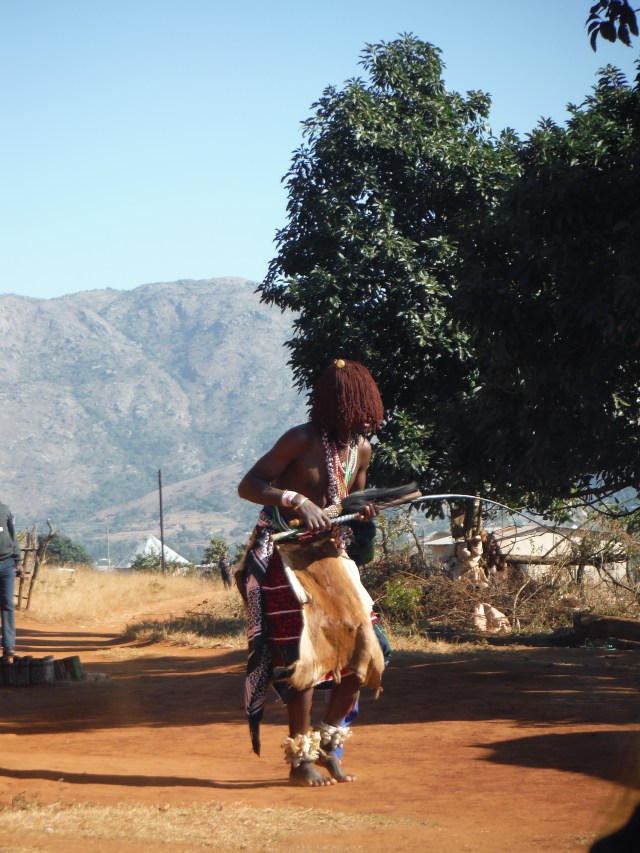
Yesterday we visited the sangoma, a traditional health practitioner who works with herbs and consultations with the ancestors to provide advice and treatment to visitors. The sangoma danced for us to the tune of a single drum. His dance expressed his consultation with his ancestors and their pleasure with our visit.

I live close to the sangoma and could return for my own consultation for a fee of E100, about $8, if I wished to discuss a health or life problem with him. I hear his drum regularly, usually on Friday nights, and wonder what is happening.

Posted in Africa, Life, Peace Corps, Swaziland, Tradition | Tagged , , , , , | Leave a comment