I’ve been caught up planning my trip to Rome. It is almost out of control because there are so many things to do and eat in so little time. For those of you who have followed my travels, you know that the food I eat on a trip usually is not too special. I often bring a meal or two and snacks with me, just to save money.  But that’s because there often isn’t local cuisine that is particularly enticing to me. Like in London, I was there for five days and had only two meal ideas: fish and chips and a meat pie. In Amsterdam, all I wanted were Stroopwafeln, which I purchased at the grocery store. In Greece, though, things changed. I had already eaten all of the food I had with me and we failed at finding a grocery store in Athens. So we ate out, and that was a wonderful. I tried so many new foods and everything I had was delicious.
I know Rome will be just as tasty as Greece. Actually, I think it will be even tastier because I am a fan of Italian food. I am so confident in Rome’s food that I doubt I will take more than a couple of granola bars and trail mix with me. Like sights, eateries are quite abundant in Rome. With two full days, a night and a morning in Rome, I do not know how much time I will have to see Rome because there is so much food I want to eat. I am looking forward to the many varieties of pasta, particularly gnocci, which is a lunchtime special on Thursdays, and lucky for me, I will be there on a Thursday. I also want to have pizza and definitely lots of gelato, particularly tartufo (death by chocolate) from Tre Scalini.
I stumbled upon the NYTimes’ Frugal Traveler’s post about Rome, and he seemed to have the problem that I am encountering. His goal was to see three things each day, and he would be happy. I don’t think I can aim so low, because I know I wouldn’t be happy with only six sights, but I will try to relax and enjoy myself and savor my food.
In addition to reading about food and restaurants in Rome, I have spent much time learning about the sights. I have my list narrowed down to a respectable number of locations. I often try to see as much as I can in a big city, but I hope to plan a lighter schedule, allowing mostly for more food but also some wandering.
My preparing has led me to many outlets for information. First, I began with my well-worn and well-read Rick Steves’ Europe  with a section on Rome (I have a special tip with a guidebook of many places, most that you aren’t stopping at. Just rip out the section you need. Why take the whole book when you need only Amsterdam or only Dubrovnik and Split? It really lightens the load!). Then I checked out all the books from the library about Rome and have currently completely read three and perused a fourth. I also purchased a book that comes with a map. I have also been in search of suggestions of what to do with two days in Rome, self-guided walks, maps, bus schedules, translators, phrasebooks and audio tours. Back when I went to Paris in 2007 I followed Rick Steves’s Paris guidebook solely. For 10 days, Rick, as I usually refer to him and his guidebook, treated me well. It taught me a lot, but since then, I have learned to broaden my horizons. Frommer’s, Fodor’s, Lonely Planet, Let’s Go and DK Eyewitness Travel all have good suggestions, as well. And each guidebook I have used for this trip has a different suggestion for the best two days in Rome. With all of their help, I really think I will have the best possible (for me) two days in Rome.
What, you might ask, will I do with all this information? As I read, I  compile lists and copy pages of information I find worthy that isn’t in my Rome Day by Day and Rick’s Rome, both of which I will take with me. Like everyone having a different two best days in Rome, everyone has a favorite pizzeria and a favorite lookout and a favorite gelato. In the end I might not follow any of my guides, but at least I am prepared because Rome in two days is a daunting task.
One of the things I learned from Rick is that he has free audio tours on his website. I am not a big fan of tour groups or tour guides because they often are incessantly dull and you don’t know that until after you have paid for the tour. But with his audio tours, I can test them out first to decide if it will be useful and then I can put it on my iPod touch and take this free and useful tour with me. I will be doing this in Rome. Rick can be cheesy in his descriptions of things, for instance, when he’s describing a figure in St. Peter’s Basilica, he says this man has his mouth open like he’s ready to sing, “The hills are alive with the sound of music.” Terrible, but I did laugh. And I know I will at the end of the tour I will know more.
Another useful stop when I was searching for information was the iTunes Store. Here I downloaded (all for free, though there are many apps that charge a fee) games to play on the plane, a flashlight, a pedometer, the CIA World Factbook and many apps specifically about Rome. Some are just a basic version of a bigger and better app that isn’t free, but all in all, I found a lot more electronic things than I expected and most of them have been useful.
Really, I don’t expect most travelers to plan like this. I do because it is what I enjoy. Preparing is almost as fun seeing the sights.
And for those who are curious, here is my arsenal of Roman travel guides:
- Rick Steves’ “Best of Europe”
- Frommer’s “Rome Day by Day”
- DK’s “Top 10 Rome”
- William Murray’s “City of the Soul”
- DK’s “Rome”
- Fodor’s “Rome’s 25 Best”
- James H.S. McGregor’s “Rome from the Ground Up”
- Rick Steves’ “Mona Winks: Self-guided tours of Europe’s top museums”
- National Geographic’s “The 10 Best of Everything”
- Harold Bloom’s “Literary Guide to Rome”
- “Rome and the Vatican: Holy Year 2000”
 and mascara) that will go through security must be 3 ounces or smaller and all must fit in a quart-sized bag.
 than in checked luggage. And I might need to charge something in the airport.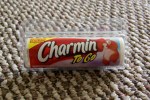
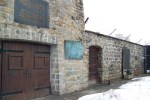 a concentration camp in Austria. On May 5, 1945, the American military arrived at the camp, setting the prisoners free. Each year there is a remembrance and liberation celebration for Mauthausen, its subcamps and places of Nazi terror. This year is the 65th anniversary of the liberation and celebrations will be held May 8 (today) at the Gusen and Ebensee camps, May 9 at Mauthausen and May 10 at Melk.
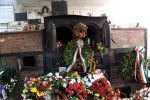
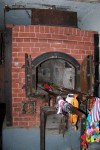 encountered the room labled “Gaskammer” and saw crematoriums, I was shocked. I had not expected to see complete structures or the pipes with holes in them where Zyklon B came out. Previously I had toured the Sachsenhausen camp in Orainenburg, north of Berlin. This camp was leveled because the Nazis did not want to leave any evidence, so all that is left are small pieces of foundations and crushed crematoriums. Mauthausen, on the other hand, is mostly complete.
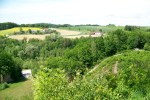 In 1939, Mauthausen became a camp for political prisoners where they were worked to death. This camp is the location of the Todesstiege, or death stairs, so called because the prisoners were forced to carry large pieces of granite, often double their body weight, up a flight of stairs. Many did not make the climb. Between Mauthausen and its subcamps, about half the 200,000 prisoners were shot, gassed, worked or beaten to death by the Nazis. (In this photo the steps begin at the center right of the photo and can be followed below the trees.)
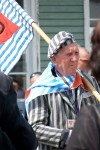 of joy, with former prisoners, some of the American liberators and diplomats from each country that could have had a prisoner in the camp marching in a parade. I write could, because prisoners from the Soviet Union were listed as only that, so there was no differentiation between someone from present-day Romania or Ukraine, for example. The Italians were the most memorable group from the parade because they had the most people and they sang songs, probably of hope and liberation, as they made their presentation.
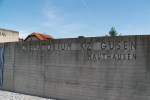 the remains of that camp have been destroyed, but two crematoriums are still standing and there is a small museum. Here we learned that our teacher’s grandfather was a member of the team that created Zyklon B. We were also told about the camp’s
  entrance gate and how it has been incorporated into someone’s house. A similar thing happened at Sachsenhausen. The guards’ houses leading to the camp entrance were not destroyed and are now also inhabited.
 with locals and the food was covered in delicious barbecue. The inside of the restaurant was designed like a feed store. What made this meal even more memorable was that we selected the location on Dixie Highway because we thought it would be closest. Alas, we were wrong and it took 45 minutes to get there.
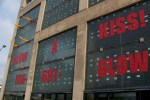 a glass blowing, architectural glass and flameworking center, was a required stop and the original inspiration for the trip. The museum was small but informational and had stops at each of the studios so visitors could watch glass being made. We watched an artist make a plate, and cleanly removed the final punty (the metal stick you hold while shaping the glass), but then almost dropped it while walking it to the annealer where it would cool down. After a couple juggles of a 900 degree piece of glass, he recovered it.
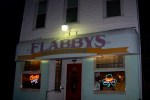 called German Town. Because I also love things German, I searched online for a German restaurant and found three. Flabby’s is one of them and it’s where we decided to have dinner. A little scary from the front, Mom wasn’t sure if she wanted to go in. After talking to a young man on the street, we decided it was safe. It was almost a dive but it was one of the best meals I’ve had in a long time. German beer was on tap, Schnitzel, Bratwursts, Sauerkraut and pretzels were on the menu and ketchup wasn’t served with the meal. The decor was classic, with a reindeer head mounted on a wall, lots of old photos and newspaper clippings and a wind chime made from beer cans. The food and beer were everything I wanted them to be, and we all left happy and full. And a warning from my father: Beware. The dark mustard is a tad bit spicy!
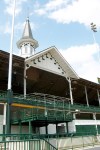 anything about horses and horse racing. We were able to walk right into the complex, but because we wanted a tour, we headed to the gift shop. Now that the
 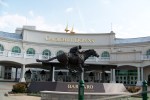 about the tickets, and no one has ever been turned away from the stadium on Kentucky Derby day. There is an unlimited number of $40 general admission tickets that give you the honor of standing in the infield where you really can’t see much but you can say you were there. We went in the afternoon because we were worried about morning showers, but before 10 a.m. is the time to go if you want to see horses practicing on the track.
 Heights Promenade. It was also a dream trip because I was able to see so many shows on Broadway. My other dream trips include my nine months in Austria and trips to Venice and Murano to see
 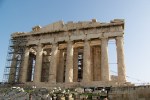 glass blowing, Athens to see the Parthenon, Santorini to see its cliff-side towns and volcanic-rock beaches, Delft to see the Vermeer museum and Royal Delft pottery, the Hague to see “Girl with a Pearl Earring,” and Keukenhof to see millions of tulips.
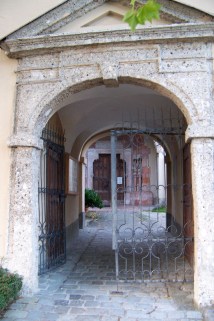 Nonntal, with Nonnberg Abbey on the Mönchsberg mountain just below the fortress. Enter the abbey through a wrough-iron gate and open intricately carved wooden doors into the nave. It’s chilling and peaceful and almost always tourist-free. Outside, admire the Alps to the south.
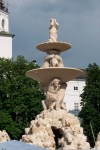 Triton and horses and confidently splash your hand in the fountain. Here, you can take a Fiaker ride, and the horse-drawn carriages and drivers have not changed much in the years since the film. The cathedral is also located here, at Domplatz. Its soaring ceilings with hundreds of murals and the five organs are a sight to see.
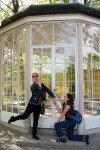 and later in “Something Good,” the love song between Maria and the captain, was shipped back to Salzburg after filming was complete in Hollywood and placed in the gardens at Schloss Hellbrunn. Take Bus 25 to get here to visit the ample grounds at this palace of Markus Sitticus, one of Salzburg’s former prince archbishops. After touring the trick fountains that spray water at unsuspecting guests, walk down Hellbrunner Allee to see Schloss Frohnburg, the palace used in the film as the front of the von Trapp house.
 to Switzlerland, ride the same Bus 25 to its final stop at the Untersbergbahn in St. Leonhard, a small village just outside of Salzburg. The cable car takes riders up 2.5 kilometers to a height of 1776 meters. The summit is another 196 meter climb. If the von Trapps would have climbed this mountain to escape (they really took the train to Italy), they ironically would have been headed in the direction of Hitler’s Eagle’s Nest in Berchtesgaden, Germany, one of his main work stations during the years of the Third Reich.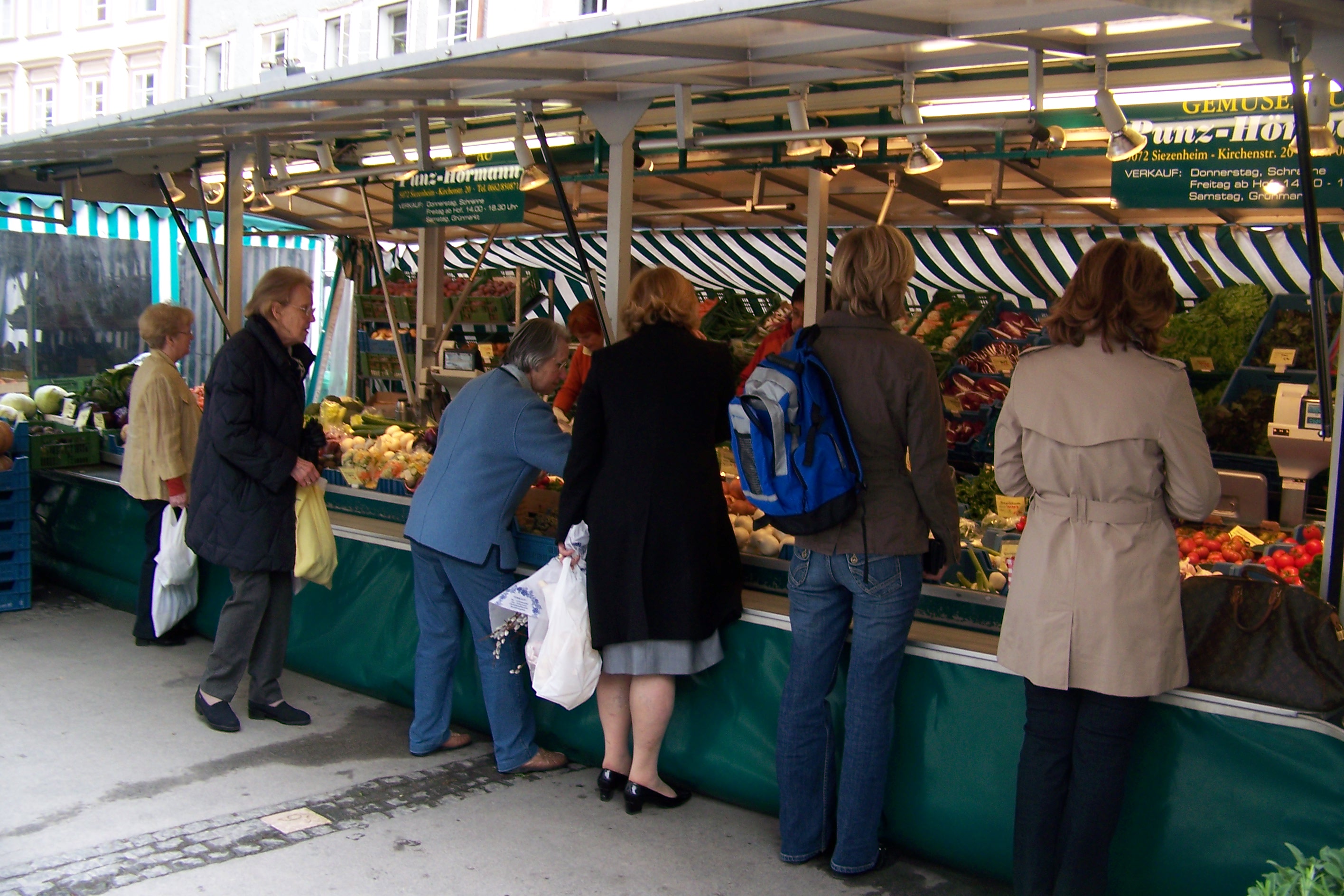
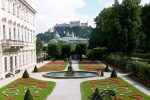 is where the children run through gardens singing, along with dancing through a vine-covered tunnel, tapping dwarves on their heads, skipping around a fountain with a Pegasus statue and end the song running up a set of steps. The view from these steps is outstanding — flowers lead to fountains which lead to baroque buildings ending with a direct view of the Festung.
 “Edelweiss” on the stage in the Felsenreitschule as their final song before leaving Austria to escape the Nazis. The hall looks just as it did in the film, so the Nazis standing in all of the arches surrounding the stage and an audience full of Austrians singing along are easily envisioned. Tours of the three-hall performance complex are available daily at the Festspielhaus at 2 p.m., with added tours at 3:30 p.m. in June and September and also at 9 a.m. in July and August.
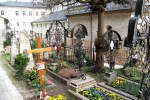 for Austrians (and one American) marked by black, iron crosses and decorated with flowers and candles. The graves are extremely close together and rents are due every ten years. When rent isn’t paid, the grave is dug up and someone new is buried. At the edges of the cemetery are gated graves that were used as the basis for the graves the von Trapps hide behind at the beginning of their escape from Austria.
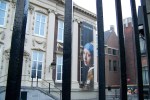 Vermeer, the painter of “
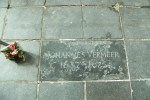 and I scrapped Gouda before I left Austria. Even without those components, I just remember that I accomplished the three things I set out to do on that trip, and everything else was just an added bonus. I cherished the time I spent seeing so many Vermeer paintings and surrounded by millions of tulips.